
Top Exhibits at Okinawa Churaumi Aquarium

Welcome to Okinawa Churaumi Aquarium, one of Japan’s greatest marine attractions and among the world’s finest aquariums! Located in Ocean Expo Park in Motobu, this amazing facility offers visitors an unforgettable journey into the underwater world of Okinawa and the surrounding Ryukyu Islands.
From enormous whale sharks to tiny glowing deep-sea creatures, this guide will walk you through the must-see exhibits that make Churaumi Aquarium such a special place to visit. Let’s dive in!
1. Kuroshio Sea Tank
The Heart of the Aquarium
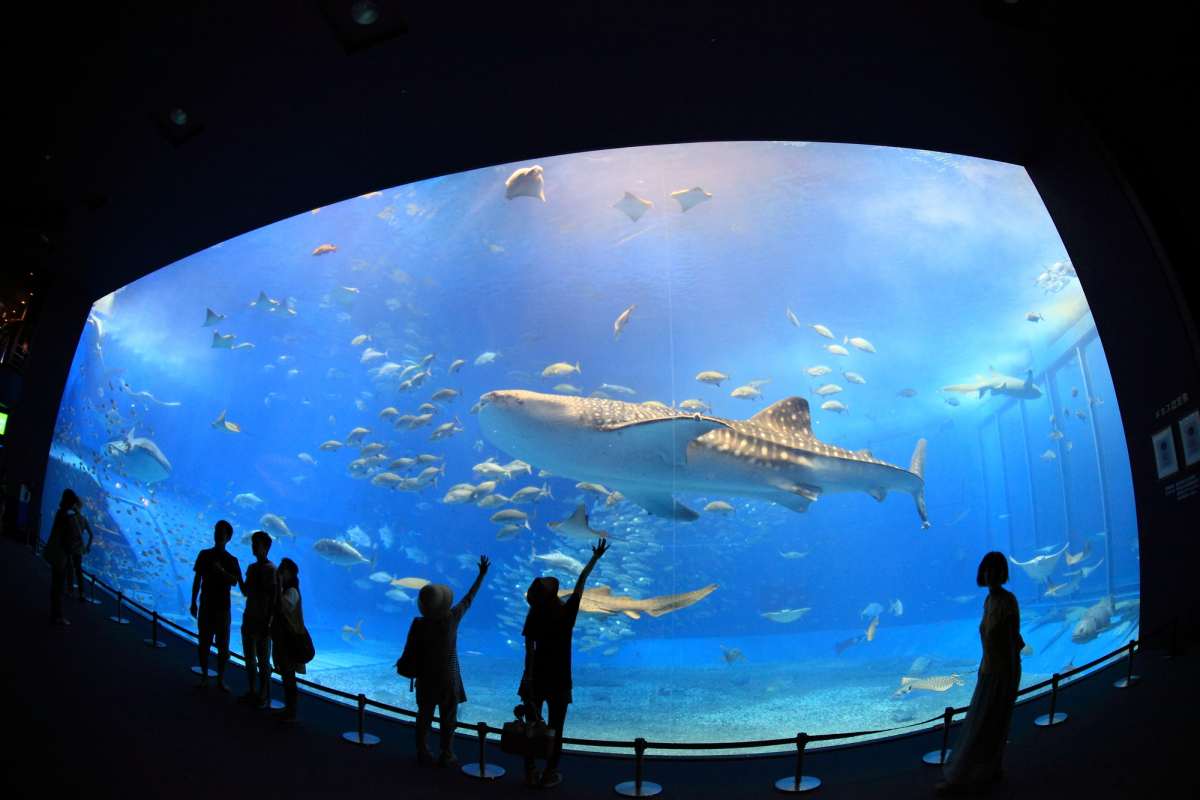
The Kuroshio Sea tank is truly the star attraction at Churaumi. As you enter the main viewing area, you’ll be greeted by one of the largest aquarium tanks in the world—a massive underwater window into the open ocean.
What makes it special:
- Enormous 7.5 million liter tank with a viewing panel that’s 22.5 meters wide, 8.2 meters high, and 60 centimeters thick
- Home to majestic whale sharks that can grow up to 8.8 meters long
- Giant manta rays (Mobula alfredi) that seem to “fly” through the water
- Schools of thousands of fish swimming in organized patterns
- Multiple viewing angles including a spectacular top-down view
Don’t miss: The feeding times! Check the daily schedule when you arrive to watch the whale sharks and other marine life during mealtimes. It’s like watching a living ocean documentary right before your eyes.
Cool fact: Churaumi is one of the few aquariums in the world to keep whale sharks long-term and has made groundbreaking progress in studying their behavior, nutrition, and care in captivity.
Best photo spot: Stand at the center of the main viewing panel and capture the whale sharks as they glide past. The blue water creates a perfect backdrop for these gentle giants.
Tours & Activities
2. Coral Sea
A Living Reef Under the Sky
The Coral Sea exhibit is unique because it sits under an open roof, allowing natural sunlight to stream in. This creates perfect conditions for the coral to grow just like it would in nature.
What makes it special:
- Features over 80 different coral species and more than 400 coral colonies
- Many corals have been growing here for over ten years
- Natural sunlight and fresh seawater pumped directly from the nearby ocean
- Home to hundreds of colorful tropical fish that live among the coral
- A vibrant underwater garden that shows what healthy reefs look like
Don’t miss: Visit around midday when the sunlight hits the tank perfectly, making the colors of the coral and fish truly pop.
Cool fact: The aquarium actively grows and cultivates coral as part of conservation efforts to protect Okinawa’s natural reefs.
Best photo spot: Look for the shallow areas where the sunlight creates dancing patterns on the coral branches.
3. Tropical Fish Sea
Colorful Underwater Neighborhoods
Located on the third floor, the Tropical Fish Sea brings you face-to-face with the vibrant residents of Okinawa’s coastal waters. Each tank recreates a different underwater habitat—from shallow reefs to sandy seafloors and hidden caves.
What makes it special:
- Hundreds of species of tropical fish in beautifully designed habitats
- Clear viewing panels that let you get extremely close to the fish
- Educational displays that explain the relationships between different species
- Perfect for visitors of all ages, especially children
- Some of the most colorful and photogenic creatures in the aquarium
Don’t miss: Look for the clownfish (like Nemo!) hiding among sea anemones, the bright yellow butterflyfish, and the vividly patterned angelfish.
Cool fact: Many of the fish change their colors and patterns as they grow from juveniles to adults. The displays often show different life stages of the same species.
Best photo spot: The tanks with coral branches where schools of small, brightly colored fish gather in groups.
4. Deep Sea
Mysteries of the Ocean Depths
Step into the dimly lit Deep Sea exhibit and discover the strange creatures that live hundreds of meters below the ocean’s surface. This fascinating exhibit recreates the mysterious world where sunlight never reaches.
What makes it special:
- Over 100 species of deep-sea organisms rarely seen by humans
- Unique lighting that highlights bioluminescent creatures that create their own light
- Preserved specimens of rarely-seen animals, including a giant squid
- Educational displays about how animals survive in extreme deep-sea conditions
- Eerie, immersive atmosphere that makes you feel like you’re exploring the deep
Don’t miss: The bioluminescent creatures that glow in the dark and the Japanese spider crab with its incredibly long legs.
Cool fact: Some of the fish displayed here live at depths where the pressure would crush a submarine, and the water is just above freezing.
Best photo spot: The tanks with glowing creatures set against the dark background—you might need to adjust your camera settings for low light.
5. Dolphin Lagoon & Okichan Theater
Playful Performances with an Ocean View
Located outside the main aquarium building, the Dolphin Lagoon and Okichan Theater offer free shows throughout the day. With the beautiful East China Sea as a backdrop, you can watch dolphins demonstrate their amazing intelligence and athletic abilities.
What makes it special:
- Multiple dolphin shows daily in an open-air theater
- Free entry with your aquarium ticket
- Spectacular jumps, spins, and synchronized swimming
- Educational presentations about dolphin behavior and conservation
- Optional interactive experiences where you can feed or touch dolphins (requires advance reservation and additional fee)
Don’t miss: Arrive at least 15 minutes early to get a good seat, especially during busy tourist seasons.
Cool fact: The dolphins at Churaumi participate in training voluntarily through positive reinforcement, and the programs are designed to stimulate their natural behaviors and intelligence.
Best photo spot: The front rows offer splash zone excitement (be prepared to get wet!), while the upper seats provide a better overall view of the performances with the ocean in the background.
6. Shark Research Lab
Up Close with Ocean Predators
The Shark Research Lab offers a fascinating look at these often misunderstood ocean predators. Here you can learn about the different shark species found in Okinawan waters and their important role in keeping ocean ecosystems healthy.
What makes it special:
- Various species of sharks, primarily small to medium-sized, including reef and bamboo sharks
- Interactive displays explaining shark anatomy, senses, and behavior
- Educational materials that help dispel myths about sharks
- Touch pools with shark egg cases and other safe-to-touch items
- Conservation information about protecting threatened shark species
Don’t miss: The shark feeding demonstrations (check daily schedule) where staff explain shark behavior while they eat.
Cool fact: Despite their fearsome reputation, most shark species are actually threatened by human activities, and many play crucial roles in maintaining healthy oceans.
Best photo spot: The large circular tank where you can capture sharks swimming overhead.
7. Sea of Tropical Origin
Evolution of Marine Life
This fascinating exhibit traces the evolutionary journey of marine life from ancient times to the present day. It helps visitors understand how the diverse marine ecosystems around Okinawa developed over millions of years.
What makes it special:
- Displays of both living creatures and fossil specimens
- Primitive marine animals like horseshoe crabs that have remained unchanged for millions of years
- Interactive timeline showing how marine life evolved
- Educational information about how the geography of Okinawa influenced its unique marine biodiversity
- Engaging displays suitable for all ages
Don’t miss: The living nautilus, a fascinating “living fossil” that represents one of the oldest surviving families of creatures on Earth.
Cool fact: Some creatures in this exhibit have remained virtually unchanged for over 400 million years, surviving multiple mass extinction events.
Best photo spot: The nautilus tank, where you can capture these spiral-shelled creatures that swim using jet propulsion.
8. Mangrove Exhibit
Where Land Meets Sea
This newer addition to the aquarium showcases the important transition zone between land and sea. Mangrove forests protect coastlines, provide nursery areas for young fish, and support unique wildlife.
What makes it special:
- Living mangrove trees with their distinctive root systems visible both above and below water
- Small fish, crabs, and other creatures that make their home in mangrove ecosystems
- Educational information about the environmental importance of mangroves
- Displays showing how mangroves protect coastal areas from storms and erosion
- Important conservation messages about protecting these threatened habitats
Don’t miss: Look carefully among the roots to spot tiny fish and crustaceans hiding in the underwater root system.
Cool fact: Mangroves are among the most carbon-rich forests in the tropics, storing up to four times more carbon than other tropical forests.
Best photo spot: The viewing panels that show both the above-water and underwater portions of the mangrove ecosystem.
9. Touch Pool Experience
Hands-On Marine Discovery
Perfect for families with children, the Touch Pool area gives visitors the chance to gently touch and interact with hardy marine creatures under staff supervision.
What makes it special:
- Shallow pools with safe-to-touch creatures like starfish, sea cucumbers, and small rays
- Staff members to guide proper handling and answer questions
- Educational experience that creates memorable connections with marine life
- Great for children and visitors who learn better through tactile experiences
- Hand-washing stations nearby for before and after touching
Don’t miss: Feel the surprisingly soft skin of a ray or the surprisingly firm texture of a sea star.
Cool fact: Many of the animals in touch pools have remarkable regenerative abilities—some sea stars can regrow entire arms if they’re damaged.
Best photo spot: Capture the joy and wonder on children’s faces as they interact with marine life for perhaps the first time.
Practical Information for Your Visit
Always check the official website for the latest information.
Opening Hours
- 8:30 AM to 6:30 PM (March through September)
- 8:30 AM to 5:30 PM (October through February)
- Last entry is one hour before closing
- Closed on the first Wednesday and Thursday of December for maintenance
Ticket Prices
- Adults (high school and up): ¥2,400
- Children (elementary and junior high): ¥1,200
- Children under 6: Free
- Group discounts available for parties of 20+
- Combination tickets with other Ocean Expo Park attractions offer savings
Getting There
- By car: About 2 hours from Naha. Parking is available for free at Ocean Expo Park.
- By bus: Direct buses run from Naha Bus Terminal (approximately 3 hours)
- By tour: Many tour operators and travel agencies offer day tours to the aquarium, including pickup from major hotels.
Best Times to Visit
- Weekday mornings tend to be less crowded
- Avoid Japanese holidays and peak summer season (July-August) if possible
- Allow at least 3 hours to see all exhibits without rushing
- Check the schedule for feeding times and shows when you arrive
Visitor Tips
- Wear comfortable shoes—the aquarium is large and requires a lot of walking
- Bring a light jacket as some exhibit areas are kept cool
- Photography is permitted without flash
- English audio guides are available for rent
- The aquarium is wheelchair and stroller accessible
- There are several restaurants and cafés on site
Why Churaumi Aquarium Is Special
Churaumi isn’t just about seeing fish—it’s about connecting with the ocean and understanding why Okinawa’s marine environment is so special. The aquarium combines entertainment with important messages about conservation and protecting our oceans.
As you explore, you’ll notice the emphasis on research and breeding programs. Churaumi’s scientists work hard to understand and protect marine species, especially those under threat from climate change, pollution, and habitat loss.
The name “Churaumi” combines the Okinawan word “chura” (meaning “beautiful” or “graceful”) with “umi” (meaning “ocean”). This perfectly captures what makes this place so special—it celebrates the beauty of the ocean while working to ensure it remains beautiful for generations to come.
Whether you’re traveling solo, as a couple, or with family, Okinawa Churaumi Aquarium offers an unforgettable journey into the underwater world. By the time you leave, you’ll have a new appreciation for the amazing diversity of life beneath the waves and the importance of protecting our oceans.
Enjoy your visit to one of Japan’s most magnificent aquariums!