
The Meaning Behind Kintsugi: Understanding the Symbolism and Philosophy That Kintsugi Represents

Picture this: a beautiful ceramic bowl slips from your hands and shatters on the floor. Your first instinct? Probably to sweep up the pieces and throw them away. But in Japan, craftspeople saw something different—an opportunity to create something even more magnificent than before.
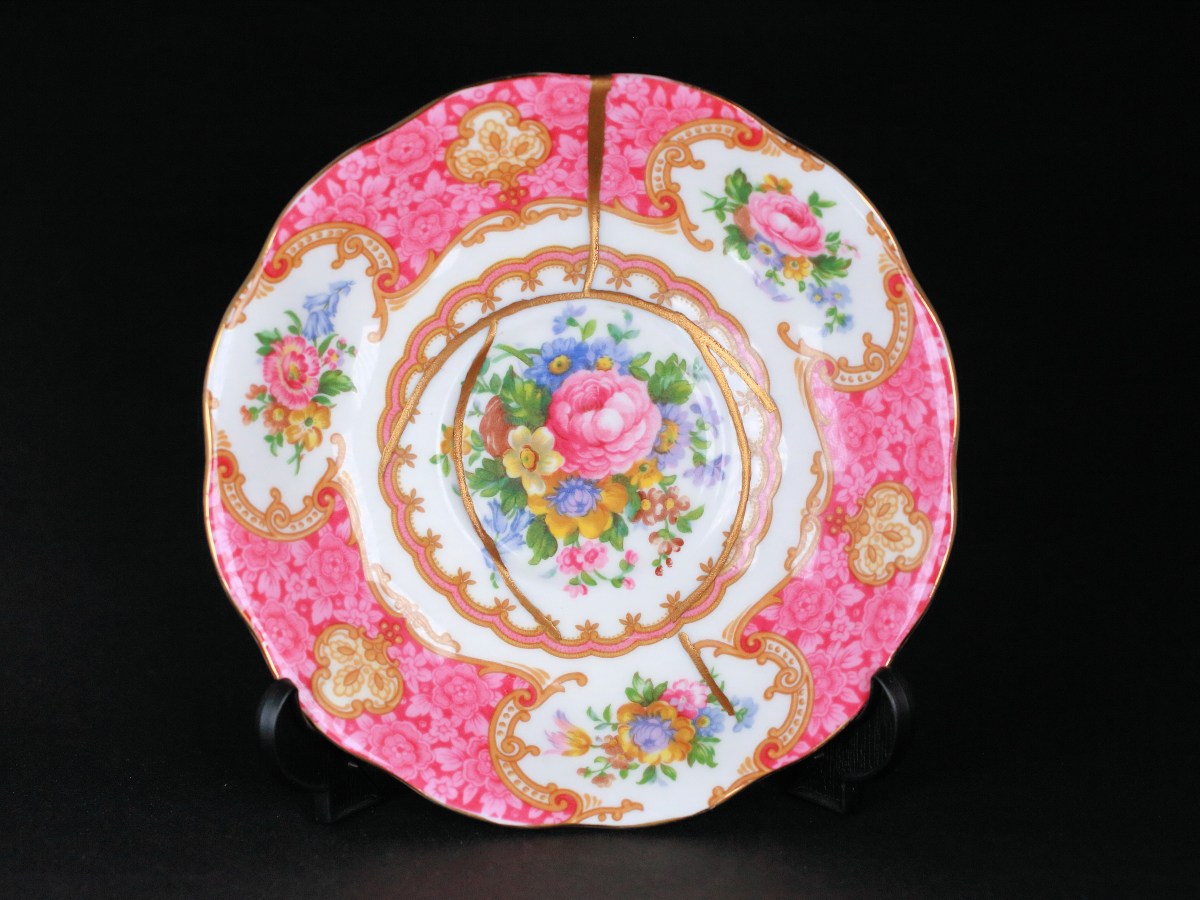
Kintsugi (pronounced “keen-tsu-gee”) literally means “golden joinery” or “golden repair.” It’s the centuries-old Japanese art of fixing broken pottery with lacquer mixed with powdered gold, silver, or copper. But here’s the beautiful part: instead of hiding the cracks, kintsugi celebrates them with precious metals, making the repair lines the most stunning feature of the piece.
This isn’t just about fixing things—it’s a complete philosophy about life, healing, and finding beauty in our broken places. Let’s explore what makes kintsugi so much more than a repair technique.
The Birth of a Beautiful Philosophy
How It All Started
One popular origin story traces kintsugi back to the late 15th century and a broken tea bowl owned by Shogun Ashikaga Yoshimasa. Though not historically verified, this tale reflects the cultural values that inspired the practice. When the shogun sent it to China for repair, it came back held together with ugly metal staples—the standard repair method of the time. The Japanese craftsmen were horrified. Surely there had to be a better way?
Instead of accepting this harsh, obvious mending, they developed something revolutionary: a repair technique that made the damage beautiful. They mixed lacquer with precious metals, creating golden veins that highlighted rather than hid the cracks. The repaired bowl became more treasured than it had ever been in its original, “perfect” state.
Why This Moment Changed Everything
This moment was a fundamental shift in thinking. Where most cultures saw brokenness as failure, the Japanese began seeing it as an opportunity for transformation. The philosophy emerged from Japan’s disaster-prone geography, where earthquakes, tsunamis, and volcanic eruptions taught people that destruction and rebuilding were natural parts of life.
Rather than fighting against this reality, kintsugi embraced it. The golden lines became symbols of resilience, showing that what doesn’t destroy us can indeed make us more beautiful.
The Deep Philosophy: More Than Pretty Pottery
Wabi-Sabi: Finding Beauty in Imperfection
Kintsugi is deeply connected to the Japanese aesthetic philosophy of wabi-sabi, which finds beauty in imperfection, impermanence, and incompleteness. While Western culture often pursues flawless perfection, wabi-sabi teaches us that true beauty lies in embracing our flaws.
Think about it: a tree is most beautiful not when it’s perfectly symmetrical, but when its branches grow in unexpected directions, when its bark shows the scars of storms it has weathered, when autumn leaves reveal the natural cycle of life and death. Kintsugi applies this same wisdom to human-made objects—and by extension, to human lives.
Mono no Aware: The Beauty of Transience
Another key concept is “mono no aware”, often translated as “the pathos of things” or the bittersweet awareness that all things are temporary. When you look at a kintsugi piece, those golden lines tell a story. They whisper about a moment when something precious was almost lost, about the care taken to bring it back to life, about the acceptance that nothing lasts forever.
This isn’t meant to make us sad, but is meant to help us appreciate what we have while we have it. The golden cracks serve as beautiful reminders to cherish the present moment because change is the only constant.
Buddhist Wisdom in Golden Lines
Kintsugi also draws from Buddhist teachings about suffering, impermanence, and transformation. Buddhism teaches that suffering is inevitable, but it can be transformed into wisdom and compassion. The golden repair represents this transformation, taking something that was broken and painful and turning it into something beautiful and valuable.
The process itself requires patience and mindfulness. You can’t rush the repair. The traditional urushi lacquer needs time to cure, sometimes weeks. This teaches us that healing happens on its own timeline, not ours.
The Symbolism: Why Gold Matters
Gold as Transformation
Why gold specifically? This choice isn’t accidental. Gold represents preciousness, permanence, and transformation. In many cultures, gold symbolizes the divine, the eternal, the most valuable. By using gold to repair cracks, kintsugi suggests that our broken places aren’t shameful—they’re sacred.
The gold doesn’t try to make the pottery look like it was never broken. Instead, it creates something entirely new—a piece that tells the story of its journey through damage and healing. The message is powerful: you are not damaged goods. You are a masterpiece in progress.
The Collaborative Nature of Healing
Unlike aggressive repairs that dominate or overwhelm the original material, the gold in kintsugi works in partnership with the ceramic. It doesn’t fight against the existing beauty; it enhances it. This represents a gentler approach to healing that honors what was while creating something new.
Illumination, Not Concealment
The golden lines don’t hide the damage—they illuminate it. This is perhaps the most radical aspect of kintsugi philosophy. In a culture that often tells us to hide our struggles, put on a brave face, and pretend everything’s fine, kintsugi says: “Show your scars. They’re beautiful.”
Modern Psychology Meets Ancient Wisdom
Post-Traumatic Growth
Modern psychology has discovered what kintsugi has known for centuries: trauma doesn’t have to leave us permanently damaged. Research on post-traumatic growth shows that many people don’t just recover from difficult experiences. They actually become stronger, wiser, and more compassionate.
Psychologists now use kintsugi as a therapeutic metaphor, helping clients reframe their painful experiences not as evidence of weakness, but as sources of unique strength and beauty. Some therapists have adopted kintsugi as a metaphor or workshop activity to help clients reframe trauma, though it is not a formal therapeutic modality.
Identity Reconstruction
Research published in major psychology journals shows how kintsugi principles help people rebuild their sense of self after major life disruptions. The process mirrors what therapists call “identity reconstruction”, learning to integrate difficult experiences into a coherent, meaningful life story.
Studies of people recovering from mental health crises, major illnesses, or life trauma show patterns remarkably similar to kintsugi: an initial shattering, a period of careful repair, and often an emergence into something more resilient and beautiful than before.
Healthcare and Healing
During the COVID-19 pandemic, healthcare workers overwhelmed by stress and trauma began using kintsugi principles to understand their experiences. Instead of seeing themselves as “broken” by the crisis, they learned to see their cracks as evidence of their compassion and dedication.
Living the Kintsugi Philosophy
Practical Wisdom for Daily Life
So, how do we apply kintsugi thinking to our actual lives? Here are some ways this ancient wisdom translates to modern living:
Reframe Your Story: Instead of seeing your difficult experiences as things that happened to you, try seeing them as things that happened for you—opportunities for growth, wisdom, and deeper compassion.
Embrace Your Scars: Whether physical, emotional, or psychological, your scars tell the story of your survival. They’re proof of your strength, not evidence of your weakness.
Practice Patience with Healing: Just like the urushi lacquer needs time to cure, your own healing can’t be rushed. Trust the process, even when progress feels slow.
Find Beauty in Imperfection: Look for the kintsugi in everyday life—the charm of a weathered building, the character lines on a beloved face, the unique quirks that make things special rather than standardized.
Relationships and Community
Kintsugi also offers wisdom for relationships. Every relationship experiences breaks: arguments, misunderstandings, betrayals, losses. The question isn’t whether these breaks will happen, but how we’ll repair them.
Will we try to pretend the damage never occurred? Will we patch things up quickly and move on? Or will we take the kintsugi approach—acknowledging what happened, honoring the pain, and working together to create something that incorporates the experience of brokenness into a new kind of beauty?
Global Applications
The philosophy has found applications far beyond individual healing. Communities dealing with natural disasters use kintsugi principles to rebuild not just structures, but social bonds. Organizations use it to transform workplace failures into learning opportunities. Even international diplomacy has borrowed the kintsugi language to describe healing relationships between nations.
The Deeper Meaning: Why This Matters Now
A Counter-Culture to Throwaway Society
In our disposable culture, where broken things are quickly replaced rather than repaired, kintsugi offers a revolutionary alternative. It suggests that things—and people—become more valuable through their experiences of breaking and healing, not less.
This philosophy challenges some of our deepest cultural assumptions about worth, beauty, and success. It suggests that:
- Perfection isn’t the goal—transformation is
- Hiding damage creates shame—revealing it creates connection
- Quick fixes aren’t always better—sometimes the slow, careful repair creates lasting beauty
- What makes us unique isn’t our flawlessness—it’s how we’ve grown through our challenges
Hope for the Broken-Hearted
Perhaps most importantly, kintsugi offers hope to anyone who has ever felt shattered by life. It whispers a powerful truth: your breaking is not your ending. Your cracks are not your flaws; they’re your opportunities for golden repair.
Whether you’re dealing with illness, loss, failure, trauma, or simply the everyday wounds that come with being human, kintsugi suggests that your healing journey can create something more beautiful than what existed before. Not the same—better. Not unmarked—marked with gold.
The Art of Becoming
Ultimately, kintsugi teaches us that life isn’t about avoiding damage—it’s about learning to repair ourselves and each other with love, patience, and hope. It’s about understanding that our scars can become our most beautiful features, our struggles can become our greatest strengths, and our breaks can become our most important transformations.
Your Own Golden Repair
The meaning behind kintsugi goes far beyond pottery repair. It’s a philosophy of resilience, a celebration of imperfection, and a roadmap for transformation. It teaches us that breaking isn’t failing—it’s just the first step in becoming something even more beautiful.
In a world that often makes us feel like we need to hide our struggles, kintsugi offers a different path. It invites us to honor our journey, including the difficult parts. It suggests that our cracks—whether literal or metaphorical—can become the most beautiful thing about us when we repair them with love, care, and time.
So the next time life breaks you, remember the ancient wisdom of kintsugi. Remember that gold is precious, that healing takes time, and that sometimes the most beautiful art comes from the courage to transform our broken pieces into something magnificent.
Your cracks are not your curse, they’re your opportunity for golden repair. And that repair, that transformation, that courageous choice to heal and grow, that’s where the real beauty lies.