Know Before You Go: Essential 2025 Rules for Climbing Mt. Fuji

Mt. Fuji (Fujisan) is more than just Japan’s highest peak at 3,776 meters—it’s a UNESCO World Heritage Site, a spiritual icon, and a rite of passage for hikers from around the world. But 2025 brings big changes to how you can climb. From new entry fees and daily caps to stricter time limits, these updates will affect everyone—from first-time trekkers to experienced climbers.
If you’re planning your ascent, this guide will walk you through everything you need to know: the rules, the best routes, safety tips, packing lists, and even how to rent gear if you’re traveling light.
1. The New 2025 Climbing Fee
As of July 2025, climbing Mt. Fuji will cost ¥4,000 per person (about USD $25–28).
This fee applies to all four official trails: Yoshida, Subashiri, Gotemba, and Fujinomiya.
How to Pay:
- Payment is required online in advance via the official booking system.
- It’s separate from any mountain hut bookings.
- The goal is to reduce overcrowding and preserve the mountain’s environment.
2. Daily Climber Limits
The Yoshida Trail, the most popular route, now has a daily cap of 4,000 climbers:
- 3,000 slots are available for online reservations.
- 1,000 slots are for same-day entry at the trailhead.
Other trails may also get caps in the future if congestion continues.
Why It Matters:
If you don’t book early, you may have to try for same-day entry, which can be risky in peak season (especially during Obon Week in mid-August).
💡 VELTRA Tip: You can book a Mt. Fuji climbing tour that handles logistics, transportation, and scheduling so you can focus on enjoying the climb.
Tours & Activities

3. Restricted Entry Times
To prevent dangerous “bullet climbing” (rushing from base to summit overnight without rest):
- No entry between 2:00 PM and 3:00 AM unless you have a confirmed mountain hut booking.
This is to protect hikers from fatigue, altitude sickness, and accidents in the dark.
4. Choosing the Right Route
Mt. Fuji has four official climbing routes, each with its own character.
| Route | Best For | Opening Dates | Difficulty | Notes |
|---|---|---|---|---|
| Yoshida | First-timers, most facilities | July 1–Sept 10 | Moderate | Sunrise views, many huts |
| Subashiri | Scenic forest start, moderate crowds | July 10–Sept 10 | Moderate | Joins Yoshida trail near top |
| Gotemba | Experienced hikers, fewer crowds | July 10–Sept 10 | Hard | Longest route, “sand run” descent |
| Fujinomiya | Shorter climb, direct ascent | July 10–Sept 10 | Hard | Steep, fewer rest points |
5. The Official Climbing Season
- Early July to early September
- Trails close outside this period due to snow, ice, and high winds.
- Weather can change drastically—even in summer—so always prepare for cold and rain.
Off-season climbing is strongly discouraged. Facilities are closed, conditions are hazardous, and rescues are common.
6. Staying Overnight: Mountain Huts
Mountain huts are basic but essential for:
- Rest and acclimatization
- Warm meals
- Securing summit sunrise timing
Booking Tips:
- Reservations open April 2025.
- Book early, especially for weekends and Obon Week.
- Bring cash; huts rarely accept cards.
💡 VELTRA Tip: All Mt. Fuji climbing tours on VELTRA include mountain hut reservations, saving you the hassle of arranging accommodation yourself.
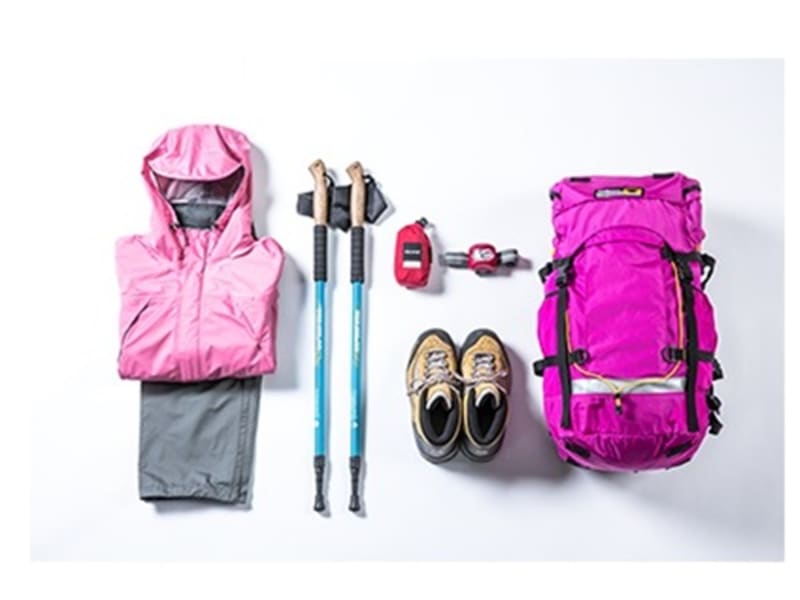
7. What to Pack
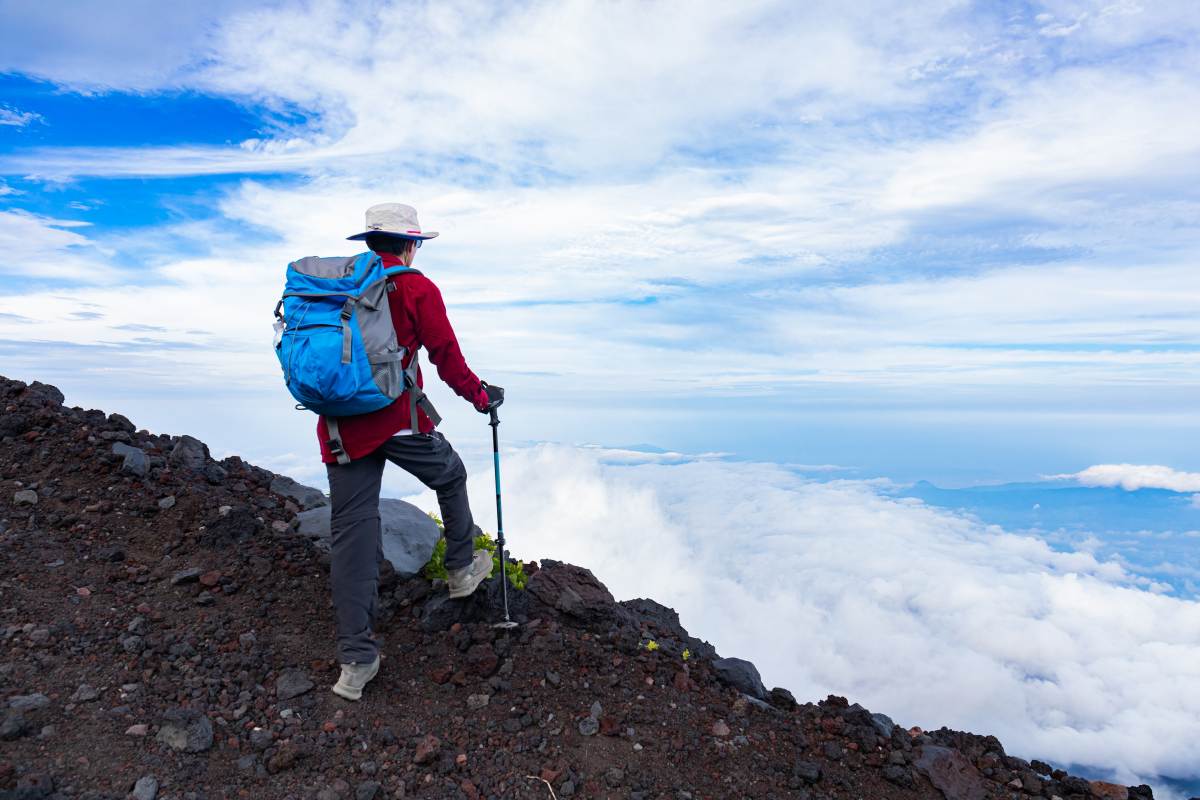
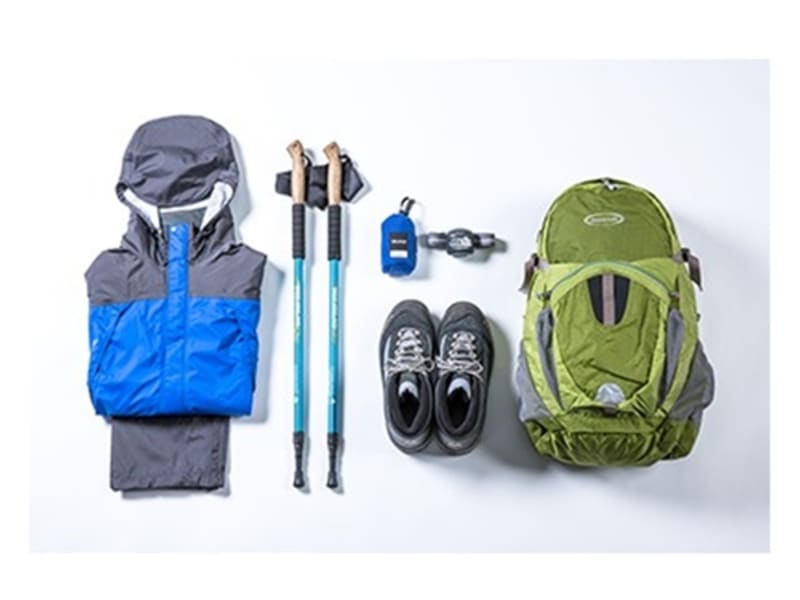
Even in August, the summit can drop below freezing. Here’s the essential list:
Clothing:
- Waterproof jacket & pants
- Warm mid-layers (fleece or down)
- Hiking boots (broken in, waterproof)
- Gloves & beanie
- Extra socks
Gear:
- Headlamp (with spare batteries)
- Trekking poles
- Backpack with rain cover
- Sunglasses & sunscreen
Food & Drink:
- High-energy snacks
- 1.5–2 liters of water
- Electrolyte packets
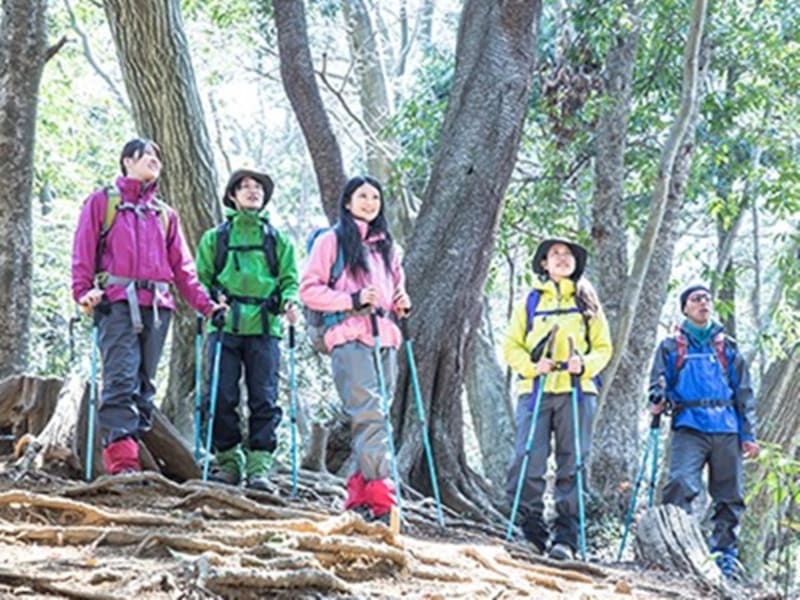
Gear Rental
8. Safety & Health
Altitude sickness can affect anyone, even the fit and experienced.
Prevention:
- Pace yourself.
- Spend time at the 5th Station before starting.
- Drink water regularly.
If Symptoms Appear:
- Rest immediately.
- Descend if symptoms worsen (headache, nausea, dizziness).
9. Environmental Etiquette
Mt. Fuji is a UNESCO site—treat it with respect:
- Take all trash down with you.
- Stick to marked trails.
- Avoid loud music and drones.
10. Guided Tours vs. DIY
DIY Pros: Flexibility, cheaper if you already own gear.
DIY Cons: More planning, language barrier, logistics.
Guided Tours Pros:
- Expert safety guidance
- Pre-arranged transport & huts
- Gear rental options
- Cultural insight from guides
Sample 2-Day Climb Itinerary
Day 1:
- Morning: Travel to 5th Station
- Afternoon: Begin climb
- Evening: Rest in mountain hut
Day 2:
- Early AM: Summit for sunrise
- Morning: Descend
- Afternoon: Return to Tokyo/Kawaguchiko
Final Tips for 2025
- Book early—both trail slots and huts.
- Follow the new time restrictions.
- Prepare for cold and unpredictable weather.
- Respect the mountain and fellow climbers.
- Consider a guided tour if you want convenience and safety.
Ready to Take on Mt. Fuji?
Climbing Mt. Fuji is an unforgettable adventure, but in 2025 it requires more preparation than ever. From securing your trail slot to packing the right gear, planning ahead will make your climb safer and more enjoyable. The easiest way to simplify your trip is to book a Mt. Fuji climbing tour with VELTRA. You’ll get expert guidance, transportation, gear options, and mountain hut reservations all in one package—so you can focus on the climb, not the logistics.