
The Enigmatic World of Geisha and Maiko: A Comprehensive Guide for Travelers

The figures of geisha and maiko evoke a sense of timeless elegance and cultural richness, captivating the imaginations of travelers worldwide. These iconic performers are deeply intertwined with the history and traditions of Japan, representing a sophisticated world of art, hospitality, and grace. This guide aims to provide English-speaking tourists with a comprehensive understanding of geisha and maiko, offering insights into their history, training, performances, and the etiquette involved in experiencing their captivating artistry. For those seeking an authentic encounter with this unique aspect of Japanese culture, this guide serves as an invaluable resource.
Understanding the World of Geisha and Maiko

What is a Geisha? Unveiling the “Art Person”
The term “geisha” translates from Japanese as “art person” or “performing artist,” aptly describing their profession . Geisha are professional female entertainers who have undergone years of rigorous training in various traditional Japanese arts. Their primary role is to entertain guests, often businessmen, at exclusive teahouses and dinners . This entertainment encompasses a wide range of skills, including traditional dance, singing, and playing musical instruments such as the shamisen, a three-stringed lute. Beyond their performance abilities, geisha are also highly skilled in the art of conversation and hospitality, ensuring their guests feel comfortable and engaged. Many geisha also cultivate proficiency in other traditional arts like flower arranging (ikebana), the tea ceremony (chanoyu), and calligraphy, further enriching their ability to provide refined entertainment . Their dedication to mastering these arts and their ability to create a sophisticated and enjoyable atmosphere distinguish them as cultural icons.
What is a Maiko? The “Dancing Child” in Training
The term “maiko” literally translates to “dancing child” and refers to young women who are apprentice geisha, primarily in Kyoto. Typically between the ages of 15 and 20, maiko are in the initial stages of their extensive training to become full-fledged geisha. Their training is particularly focused on mastering traditional Japanese dance, which is reflected in their name. During their apprenticeship, which usually lasts around five years, maiko reside in an okiya, a geisha house, where they learn the intricate skills and etiquette of the geisha world under the guidance of experienced geisha. It is important to note that the maiko system is most prevalent in Kyoto, with other geisha districts sometimes using different terms for apprentices. The youthful charm and vibrant appearance of maiko make them a popular attraction, symbolizing the early stages of dedication to the traditional arts.
A Historical Journey: The Origins and Evolution of Geisha Culture in Japan
The origins of geisha culture can be traced back to the Edo period (1603-1868) in Japan. Interestingly, the first individuals to take on the role of geisha were actually men, known as taikomochi. These male entertainers initially served as assistants to the oiran, who were high-class and very expensive Japanese courtesans residing in the pleasure quarters of major cities like Edo (modern-day Tokyo) and Kyoto. Around the mid-18th century, female entertainers began to appear in the form of odoriko (dancers) and shamisen players. These female performers quickly gained popularity, and by the late 1700s, they had largely taken over the profession. While regulations initially forbade geisha from forming personal relationships with customers due to the courtesans’ fear of competition, patrons gradually gravitated towards the more socially accessible and less expensive geisha. By the 19th century, geisha had largely replaced oiran as the central figures of entertainment at parties. The Meiji period (1868-1912) saw a further rise in the popularity of geisha, as they became vital providers of hospitality and entertainment at dinner events for large companies and government officials. The 1920s marked the peak of geisha numbers, with as many as 80,000 entertaining guests throughout Japan. However, the strains of international warfare and the effects of Westernization led to a decline in their numbers. Despite this decrease, geisha continue to play a significant role in modern Japanese society, primarily as curators of tradition, preserving and passing down Japan’s unique artistic legacy.
Geisha vs. Maiko: Decoding the Key Differences in Appearance, Role, and Training
Understanding the distinctions between geisha and maiko is essential for any tourist hoping to appreciate their unique contributions to Japanese culture. While both are highly skilled entertainers, several key differences exist in their age, appearance, roles, and training.
|
Feature |
Geisha (Geiko in Kyoto) |
Maiko |
|---|---|---|
|
Age |
Generally older than 20 |
Typically 15-20 years old |
|
Kimono |
Simpler, often one color with patterns near the bottom, shorter sleeves (tomesode) |
Brightly colored, long sleeves (furisode), patterns from shoulder to hem |
|
Obi (Sash) |
Narrower, tied in a simple box knot at the back |
Very wide (darari obi), colorful with patterns, hanging down at the back |
|
Collar |
Plain white |
Colorful with embroidered patterns, often red |
|
Hair |
Typically wears a wig, simpler hairstyles |
Uses own hair styled elaborately |
|
Hair Ornaments |
Fewer, simpler (kanzashi) |
More numerous, elaborate, often floral |
|
Makeup |
Fully white face, both lips red, less red around eyes, no pink blush |
White face with space at hairline, only lower lip red (initially), red around eyes, pink blush |
|
Footwear |
Lower sandals (zori or geta) |
High wooden clogs (okobo) |
|
Primary Role |
Sophisticated entertainment, conversation expert |
Primarily artistic performance (dance, music) |
|
Training Focus |
Refinement of all arts, conversational skills |
Mastering traditional arts, etiquette |
|
Conversation |
Expert in initiating and maintaining conversation |
Still training, speaks less |
|
Residence |
Lives independently in geisha neighborhoods |
Lives in an okiya (geisha house) |
These distinctions reflect the progression from apprentice to accomplished artist. Maiko, with their vibrant attire and focus on performance skills, are still in the process of learning and refining their abilities. Their colorful kimonos and elaborate hairstyles serve to draw attention while they are still developing their skills, particularly in communication. In contrast, geisha, having completed their training, adopt a more understated and elegant appearance, relying on their refined artistic skills and sophisticated conversational abilities to entertain their guests . Their simpler kimonos and hairstyles reflect their maturity and mastery of their profession. The training paths also differ, with maiko undergoing intensive instruction in dance, music, and etiquette while living in an okiya. Geisha, having graduated from this stage, continue to hone their skills and build relationships with their clientele, often living more independently.
The Rigorous Path: An Overview of Geisha and Maiko Training
The journey to becoming a geisha or maiko is a demanding one, requiring years of dedication and discipline. In Kyoto, young girls typically begin their training as maiko around the age of 15, after completing their junior high education. In Tokyo and some other regions, the apprenticeship might begin later, with trainees sometimes referred to as hangyoku. The initial stage of training is often called shikomisan, where the young apprentice lives in an okiya (geisha house) and learns basic tasks, manners, and the Kyoto dialect. They also begin lessons in traditional arts such as dance and music. Following this initial period, the apprentice progresses to the minarai stage, where they learn by observing senior geisha entertain guests at parties and functions. After this observational period, they undergo a misedashi ceremony and officially debut as a maiko. The maiko training curriculum is extensive and includes rigorous lessons in traditional Japanese dance, various musical instruments, most notably the shamisen, singing, and the art of the tea ceremony. They also learn proper etiquette, comportment, and the crucial skill of engaging in refined conversation with guests. A significant part of their training involves learning how to wear the elaborate kimono and apply the distinctive makeup. Throughout their apprenticeship, the maiko live in the okiya under the guidance of the okami-san, the “mother” of the house, who oversees their training and well-being. The training period typically lasts around five years, culminating in the erikae ceremony, where the maiko “turns her collar” from red to white, signifying her graduation to the status of a geisha. This transition marks a significant milestone, acknowledging the years of hard work and dedication to mastering the traditional arts.
Experiencing the Culture: Performances and Traditions
The Art of Dance: Traditional Dances Performed by Geisha and Maiko
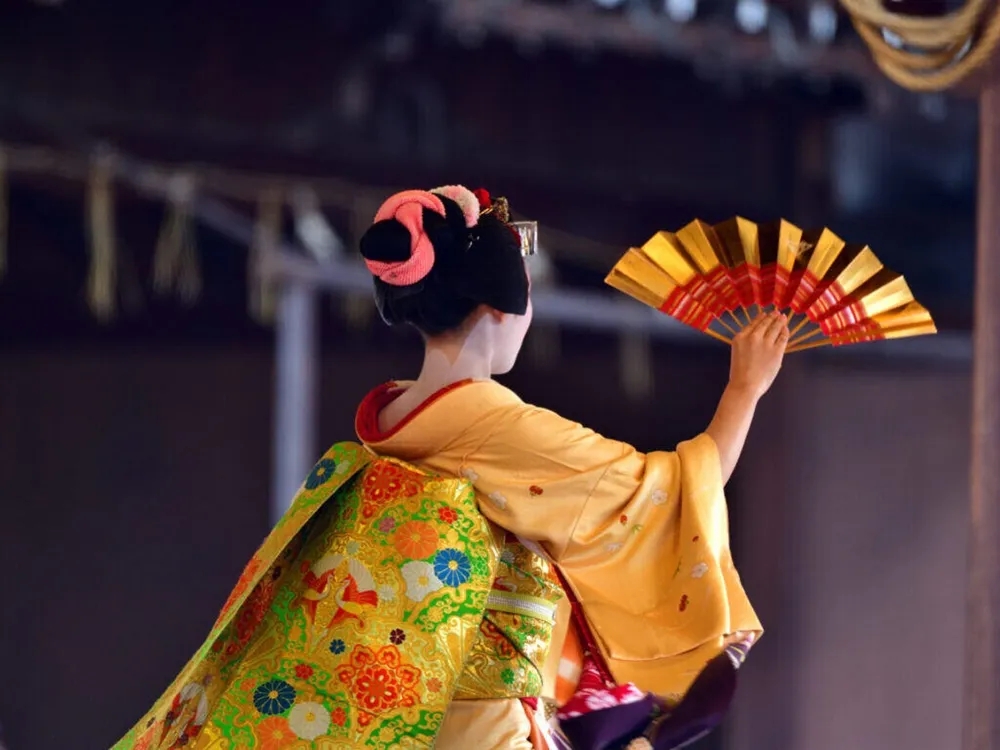
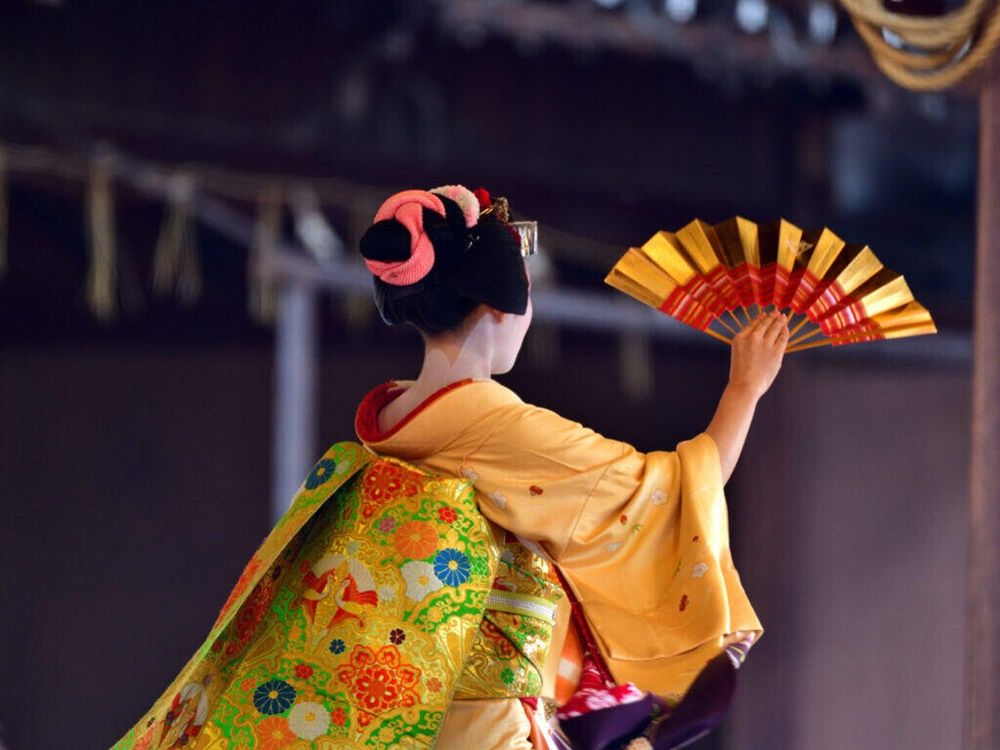
Dance is a central element of the geisha and maiko’s artistic repertoire. In Kyoto, the elegant and often dazzling Kyomai style of traditional dance is a hallmark of geisha and maiko performances. This dance form, originating in Kyoto, evolved from the integration of earlier Kamigata mai dances with elements of Shimai (Noh dance). Geisha dance styles have also been influenced by the more theatrical forms used in Noh and Kabuki theatre. Over time, these styles have been refined into the subtle and stylized movements seen today, where gestures and symbolism are used to tell stories. A key way for tourists to witness these captivating dances is through the annual public dance performances (odori) held in Kyoto’s five geisha districts (hanamachi). The most famous of these is the Miyako Odori, or “Dances of the Old Capital,” performed by the geiko (Kyoto term for geisha) and maiko of the Gion Kobu district throughout April. Gion Higashi holds its Gion Odori in November, while Pontocho’s Kamogawa Odori takes place in May, Miyagawacho’s Kyo Odori in April, and Kamishichiken’s Kitano Odori also in April. Beyond Kyoto, other regions in Japan also host geisha dances, such as the Azuma Odori in Tokyo’s Shinbashi district and the Kagurazaka Odori. These public performances offer a valuable opportunity to experience the grace and skill of geisha and maiko dance, often accompanied by traditional music and elaborate costumes.
Melodies of Tradition: Musical Instruments Played by Geisha and Maiko
Music is an indispensable part of the geisha and maiko’s entertainment skills. The shamisen is the primary musical instrument associated with geisha, used to accompany both their dances and songs. This three-stringed instrument, resembling a lute or banjo, is played with a plectrum called a bachi. Its distinct and often melancholic sound is a hallmark of geisha performances. In addition to the shamisen, geisha and maiko may also learn to play other traditional Japanese instruments. These include the koto, a 13-stringed harp; the kokyu, a type of bowed shamisen; the fue, a Japanese flute; the ko-tsuzumi, a small shoulder drum; and the taiko, a larger drum. The music played by geisha encompasses various genres rooted in classical Japanese music and folk songs, often influenced by gagaku (court music) and noh music. Notable genres include Nagauta, which are long and complex songs often used in kabuki and puppet theatre; Kiyomoto, known for its cheerful tone; Tokiwazu, with a simpler, rustic feel; Jiuta, based on regional folk songs; and Kouta, which are short songs typically focusing on shamisen with vocal accompaniment. Geisha who primarily focus on musicianship are known as jikata, while those who emphasize dance are called tachikata.
The Language of Song: Exploring the Vocal Performances
Singing traditional Japanese songs is another essential skill for geisha and maiko, often performed alongside their shamisen playing. The types of songs performed vary, ranging from the long and narrative Nagauta to the shorter and more intimate Kouta Folk songs (min’yo) also form part of their repertoire. The themes of these songs often revolve around love, loss, and the changing seasons, evoking strong emotions and vivid imagery. Vocal performances are integral to many geisha dances, with the songs providing the narrative or emotional backdrop for the movements. During banquets and other social gatherings, geisha also perform short drinking songs (ozashiki uta) to liven the atmosphere. The ability to sing these traditional songs with grace and emotion is a testament to the geisha’s dedication to their art and their role as keepers of cultural traditions.
A Serene Ritual: The Significance of the Tea Ceremony in Geisha Culture
The Japanese tea ceremony, known as Chanoyu or Sado, is a highly ritualized and deeply symbolic practice that holds significant importance in geisha culture. It embodies the core values of tranquility, respect, purity, and reverence. Geisha and maiko undergo training in the intricate procedures of the tea ceremony, learning how to prepare and serve matcha, a powdered green tea, with precise movements and mindful attention The history of the tea ceremony dates back centuries and is closely linked to Zen Buddhism, initially serving as a practice for monks to stay awake during meditation. Over time, it evolved into an art form emphasizing aesthetic appreciation and spiritual enlightenment. The ceremony involves specific etiquette for both the host and the guests, focusing on the appreciation of the tea bowl, the seasonal decorations, and the overall atmosphere of harmony and mindfulness. Tourists have opportunities to experience authentic tea ceremonies led by geisha or maiko, offering a unique glimpse into this serene ritual and the geisha’s mastery of traditional arts. This intimate encounter provides a deeper understanding of Japanese history, values, and the holistic way of life embodied by the geisha tradition.
Kyoto’s Hanamachi: Exploring the Heart of Geisha Culture in Gion and Beyond
Kyoto is widely recognized as the heart of geisha culture in Japan, home to several active geisha districts known as hanamachi, or “flower towns”. Among these, the Gion district is the most famous, attracting visitors with its preserved wooden machiya townhouses, narrow streets, and timeless ambiance. Gion is further divided into two main areas: Gion Kobu, the larger and more prestigious district known for its annual Miyako Odori dances in April, and Gion Higashi, a smaller district famous for its Gion Odori in November. In addition to Gion, Kyoto boasts four other distinct hanamachi, collectively known as the Gokagai (Five Flower Towns): Pontocho, located along the Kamo River and known for its Kamogawa Odori in May; Miyagawacho, with its kabuki influence and Kyo Odori in April; and Kamishichiken, the oldest of the five districts, known for its Kitano Odori also in April. Each of these districts has its own unique history, atmosphere, and annual public dance performances, offering tourists diverse opportunities to experience the geisha culture of Kyoto. Exploring these hanamachi provides a deeper appreciation for the traditions and artistry of Kyoto’s geiko and maiko.
Tokyo’s Geisha Districts: Uncovering Hidden Gems
While Kyoto is the most renowned center for geisha, Tokyo also has several active geisha districts, offering a different perspective on this cultural tradition. These districts are collectively called the “Tokyo Roku Hanamachi” or “The Six Flower Towns,” which include Shinbashi, Asakusa, Yoshicho, Kagurazaka, Hachioji, and Mukojima. Asakusa, known for its iconic Sensoji Temple, has a rich geisha history and a more traditional, lively atmosphere with occasional free performances at the Asakusa Culture Center. Kagurazaka, located in Shinjuku, offers a cozy and charming ambiance with cobblestone streets and traditional restaurants where geisha entertainment is sometimes included as part of the dining experience. Compared to Kyoto, Tokyo’s geisha districts might have a slightly more modern and urban feel, and the training for apprentices sometimes differs, with the term hangyoku being used instead of maiko in some areas. Nevertheless, these districts provide valuable opportunities to witness geisha performances and experience this aspect of Japanese culture in the capital city.
Beyond the Major Cities: Other Notable Geisha Districts in Japan
While Kyoto and Tokyo are the most well-known hubs for geisha, other cities and regions throughout Japan also have their own unique geisha districts, each with its own history and traditions. Kanazawa, often referred to as “Little Kyoto,” in Ishikawa Prefecture, is home to the well-preserved Higashi Chaya district and Kazue Machi district, where geisha, known locally as geigi, continue to thrive. Fukuoka, in southern Japan, has the Hakata Kenban, which oversees the local geigi tradition, with performances including the annual Hakata Odori in December. Osaka also has geisha districts in areas like Kita Shinchi and Minamichi. Other regions with a history of geisha include Niigata, Gifu, and the onsen town of Atami in Shizuoka Prefecture. Exploring these lesser-known geisha districts can offer a more intimate and regional perspective on this enduring cultural tradition, providing opportunities for unique encounters and experiences beyond the main tourist routes.
Planning Your Visit: Essential Information for Tourists
Etiquette Essentials: How to Respectfully Attend a Geisha Performance
When visiting areas where geisha and maiko live and work, or when attending a performance, it is crucial to be mindful of proper etiquette and to treat them with the respect they deserve as artists and professionals. In public areas like Kyoto’s Gion district, it is important to maintain a respectful distance and avoid approaching, chasing, or touching geisha or maiko without invitation. Speaking to them in public or calling after them is also considered intrusive. When it comes to photography, it is generally considered disrespectful to take photos of geisha or maiko in public as they walk to their appointments, as this can interfere with their schedule and personal space. If you have the opportunity to attend a private event or performance, it is usually permitted to take photographs or videos, but it is always polite to seek permission beforehand. For such occasions, dressing appropriately, avoiding overly casual or revealing clothing, and removing shoes upon entering traditional establishments are important considerations. During a geisha dinner or banquet, there are specific customs to be aware of, such as offering drinks to the geisha, participating in traditional games, and avoiding asking personal questions. Showing genuine interest in their art and culture, listening respectfully to conversations, and appreciating their efforts are key to a positive interaction. In some settings, it is customary to tip the geisha at the end of the performance by placing money in an envelope and handing it to them with both hands. By understanding and adhering to these etiquette guidelines, tourists can ensure a respectful and enriching experience while honoring the traditions and artistry of geisha and maiko.
Interacting with Grace: A Guide to Respectful Encounters with Maiko
When encountering maiko, it is important to remember that they are apprentices still in training and to extend the same courtesies and respect as one would to a geisha. Given their younger age and ongoing learning process, patience and understanding are particularly important during any interactions. The general etiquette guidelines regarding personal space, photography, and behavior in public apply equally to maiko. There are opportunities for tourists to participate in maiko transformation experiences, which involve dressing in a kimono and having professional hair and makeup done. Engaging in such experiences can provide a tangible connection to the tradition, but it’s essential to do so with respect and awareness of the cultural significance. When interacting with maiko, showing genuine interest in their training and the traditional arts they are learning is appreciated. Maintaining a polite and quiet demeanor, and perhaps offering a slight bow when greeting them, reflects an understanding of the grace and poise they embody. It is also important to be mindful of any specific guidelines provided during organized encounters, such as restrictions on touching their kimono or hair ornaments. By approaching interactions with maiko with sensitivity and respect for their dedication to their craft, tourists can have a more meaningful and rewarding experience.
Capturing Memories: Photography Guidelines in Geisha Districts
Many tourists wish to capture memories of their encounters with geisha and maiko through photographs. However, it is crucial to do so respectfully and in accordance with local guidelines. The primary rule is to respect the privacy and personal space of geisha and maiko. Avoid obstructing their path, using flash photography at close range, or attempting to take selfies with them without permission. In Kyoto’s Gion district, there are now strict regulations and fines for unauthorized photography on private roads due to issues with harassment and disrespectful behavior. It is best to take photos from a distance, from the sides or behind, and never to stop them or touch them. If you wish to take a photograph, it is always polite to ask for permission, although geisha and maiko may often be on their way to appointments and may not have time to stop. When they are with clients, all photography is strictly prohibited. Instead of focusing solely on capturing a photograph, consider simply enjoying the moment and observing their grace and beauty. For those wanting professional photos, booking a dedicated photoshoot through a reputable studio or tour operator might be a more respectful and rewarding option. Remember that geisha and maiko are not tourist attractions but individuals dedicated to preserving a unique cultural heritage .
Understanding the Costs: What to Expect for Different Experiences
The cost of experiencing geisha and maiko culture in Japan can vary significantly depending on the type of engagement. Attending public dance performances (odori) is generally the most affordable option, with ticket prices ranging from around ¥1,500 to ¥7,000. These performances offer a chance to see multiple geisha and maiko showcase their skills in dance and music. Participating in a tea ceremony led by a geisha or maiko is another relatively accessible experience, often costing between ¥4,000 and ¥10,000. For a more intimate experience, such as dining with a geisha at an ochaya (teahouse) or ryotei (traditional high-class restaurant), the costs can be considerably higher, often starting from ¥25,000 per person and potentially reaching much more for exclusive engagements. These private audiences often require an introduction from an existing customer, making them less accessible to the average tourist. Some travel agencies and hotels now offer packages that include a meal with maiko or geisha, providing a more structured way for tourists to experience this type of entertainment. When it comes to tipping geisha, while not always explicitly expected, it is a customary practice in some contexts. The tip, known as “go-shugi,” is typically placed in a small envelope and handed to the geisha with both hands after the performance. The amount is discretionary but often around ¥3,000 per person. Understanding these cost considerations will help tourists plan their budgets and choose experiences that align with their interests and financial means.
When to Go: The Best Times to See Geisha and Maiko Performances
The best times to visit Japan to potentially see geisha and maiko performances often coincide with the most pleasant weather and the occurrence of special cultural events 6. Spring, particularly during the cherry blossom season (late March to mid-April), is a popular time to visit Kyoto, and it is also when many of the annual public dances take place 25. The Miyako Odori in Gion Kobu runs throughout April, offering daily performances 25. Autumn, with its vibrant fall foliage (typically in November), is another excellent time to visit, and Gion Higashi holds its Gion Odori during this month 27. Other annual dances occur in different months, such as Pontocho’s Kamogawa Odori in May, Miyagawacho’s Kyo Odori in April, and Kamishichiken’s Kitano Odori in April 27. In Fukuoka, the Hakata Odori is held in December 40. Generally, geisha and maiko engagements tend to take place in the evenings, as they often entertain guests at dinners and banquets 52. Checking the schedules for public performances in advance is highly recommended, as these events can be popular and may require reservations. Planning your trip around these key times can significantly increase your chances of experiencing the captivating artistry of geisha and maiko.
Beyond the Surface: Addressing Common Misconceptions About Geisha
One of the most persistent and inaccurate misconceptions about geisha is that they are courtesans or prostitutes. It is crucial to understand that geisha are professional artists and entertainers who specialize in traditional Japanese performing arts and hospitality. Historically, there was a clear distinction between geisha and yujo, who were women providing sexual services . While some early female performers in the pleasure quarters may have blurred these lines, the role of the geisha evolved to focus primarily on artistic entertainment and refined conversation. The dedication to their art is often described as being “married to the art, not to a man,” highlighting their commitment to their profession. This misconception likely arose due to historical associations with the pleasure quarters and perhaps a misunderstanding of the geisha’s role in entertaining male clients. However, in modern Japan, geisha are highly respected for their cultural knowledge, artistic skills, and their role in preserving traditional Japanese arts 7. Understanding this distinction is essential for appreciating the true nature of the geisha profession and interacting with them respectfully.
Book Your Authentic Geisha or Maiko Experiences Today
Encountering the enchanting world of geisha and maiko offers a unique and enriching glimpse into Japan’s rich cultural heritage. Whether you are captivated by their graceful dances, mesmerizing music, or the serene ritual of the tea ceremony, these skilled artists provide an unforgettable experience. Explore our carefully curated selection of geisha and maiko tours and experiences on our website and book your authentic cultural journey today.