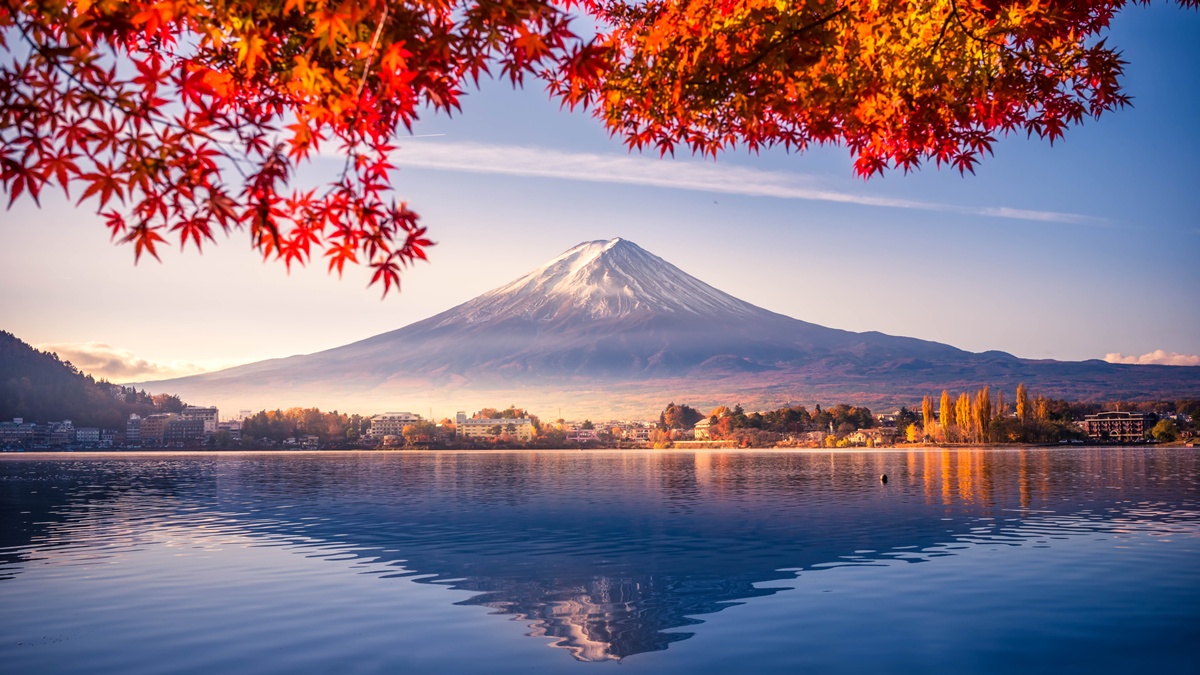
Best Places to See Autumn Leaves in Hiroshima

Momijigari, Japan’s cherished tradition of “leaf hunting”, hits differently in Hiroshima. Think glowing maples (momiji) and golden ginkgo lining rivers, temple paths, and dramatic gorges from the city center out to the mountains. Below you’ll find the best time to go, the can’t-miss spots (with access tips), and easy 1–3 day itineraries to plug straight into your plans.
When is Hiroshima’s Fall Foliage at its Best?
Because Hiroshima Prefecture spans coast, city, and mountains, color flows from north (higher, earlier) to south (lower, later) each year. Expect late Oct–early Nov up in the gorges, and mid–late Nov in the city and on Miyajima, with coastal pockets hanging on into early Dec. Always check a current-year koyo forecast the week before you go.
Top Places to See Autumn Leaves (City, Coast, & Mountains)
1) Miyajima (Itsukushima) & Momijidani Park, Hatsukaichi
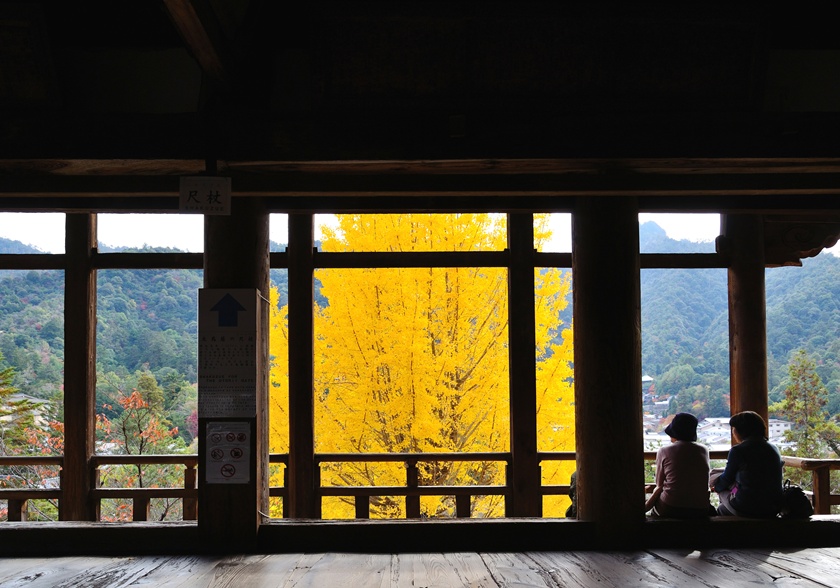
- Why go: Hiroshima’s most famous leaf spot—a maple-filled valley beneath Mt. Misen with shrine and ropeway viewpoints.
- Peak window: Usually mid–late Nov (varies by slope/elevation).
- Colors: Hundreds of maples blaze along the Momijidani River. The park has ~700 maple trees.
- Access: JR Sanyo Line from Hiroshima → Miyajimaguchi (~30 min) → 10-minute ferry to Miyajima; Momijidani is ~10 min on foot from Itsukushima Shrine. Ropeway links the valley to near Mt. Misen’s summit.
- Time needed: Half- to full day (add the ropeway + summit walk if skies are clear).
- Photo tips: Use red bridges and the river as leading lines; late-day light warms the canopy.
2) Mitaki-dera Temple (Hiroshima City)
- Why go: Mossy stone paths, three waterfalls (the name literally means “three waterfalls”), and a vermilion pagoda—gorgeous in diffused light.
- Peak window: Mid–late Nov.
- Access: JR to Mitaki Station, then ~15–20-minute walk; or city bus.
- Good to know: The grounds include memorials connected to Hiroshima’s post-war history; please keep voices low.
3) Shukkei-en Garden (Hiroshima City)
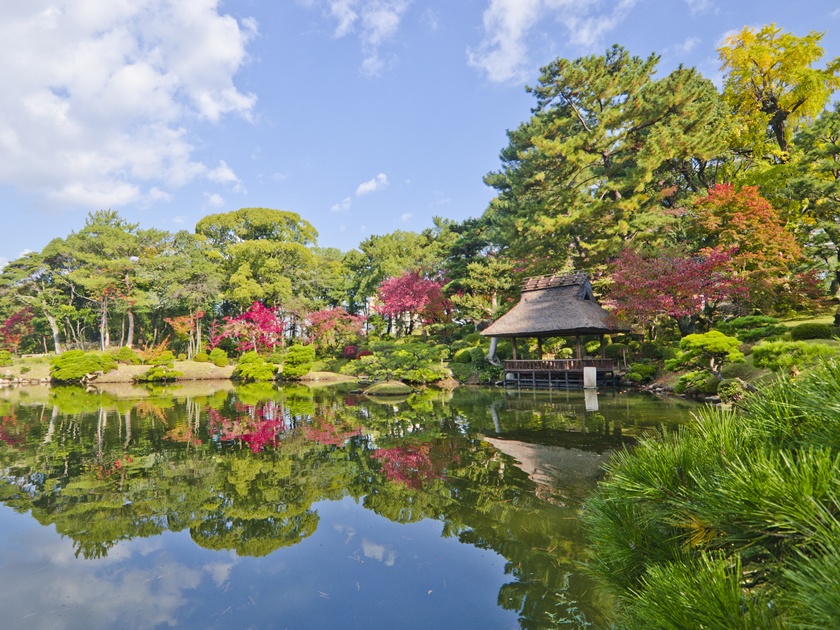
- Why go: A classic strolling garden (created in 1620 by tea master Ueda Sōko) where fiery maples reflect in a central pond; some years feature night illuminations.
- Peak window: Mid–late Nov; illuminations typically run late Nov to early Dec.
- Access: Streetcar or ~15 min on foot from the Hiroshima Station area.
- Time needed: 60–90 minutes; go near dusk if the light-up is on.
4) Hiroshima Peace Memorial Park (City stroll)
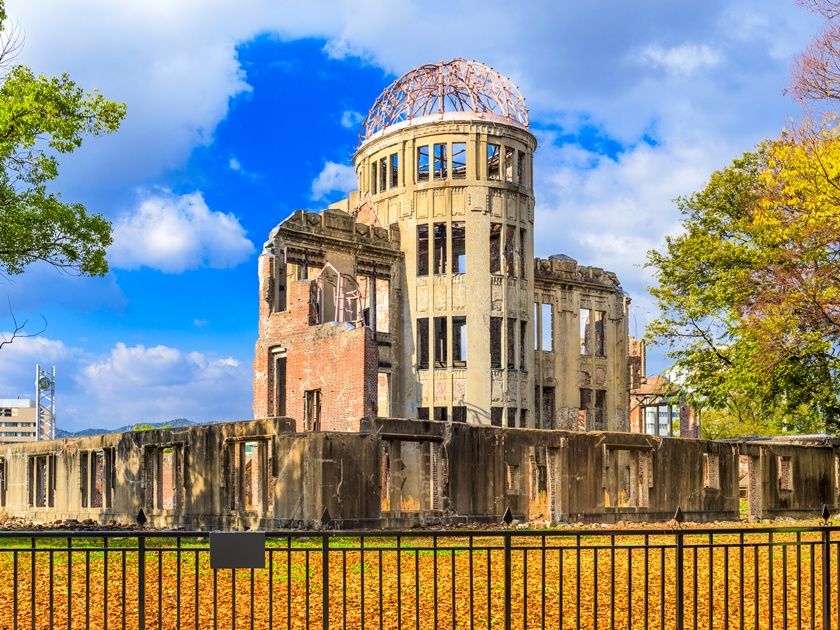
- Why go: Tree-lined promenades glowing with seasonal color in Hiroshima’s most meaningful public space.
- Access: Central Hiroshima; multiple tram lines stop nearby.
- Note: Many trees here were planted or donated as symbols of recovery and peace, including ginkgo. Please be respectful during photos.
5) Hijiyama Park (Hiroshima MOCA area)
- Why go: Gentle hill walks with city views and contemporary art at Hiroshima City Museum of Contemporary Art (MOCA).
- Access: Take the Hiroden tram to Hijiyamashita, then ~500 m on foot.
- Time needed: 1.5–2 hours, including lookout photos.
6) Senkoji Park, Onomichi
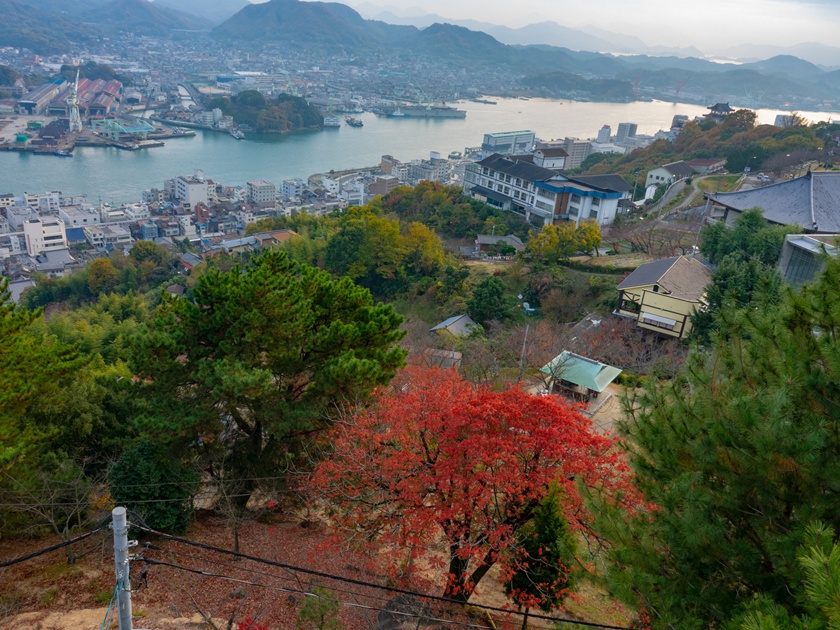
- Why go: Cable car + hilltop views across the Seto Inland Sea—sunsets are superb.
- Access: Onomichi Ropeway (3-minute ride) to the park; trails meander among temples and viewpoints.
7) Buttsu-ji Temple, Mihara
- Why go: A renowned Rinzai Zen training temple wrapped in cedar and maple—autumn is especially atmospheric.
- Access: Easiest by car or local bus from Mihara; allow a half day.
8) Sandankyo Gorge, Akiota (earlier color)
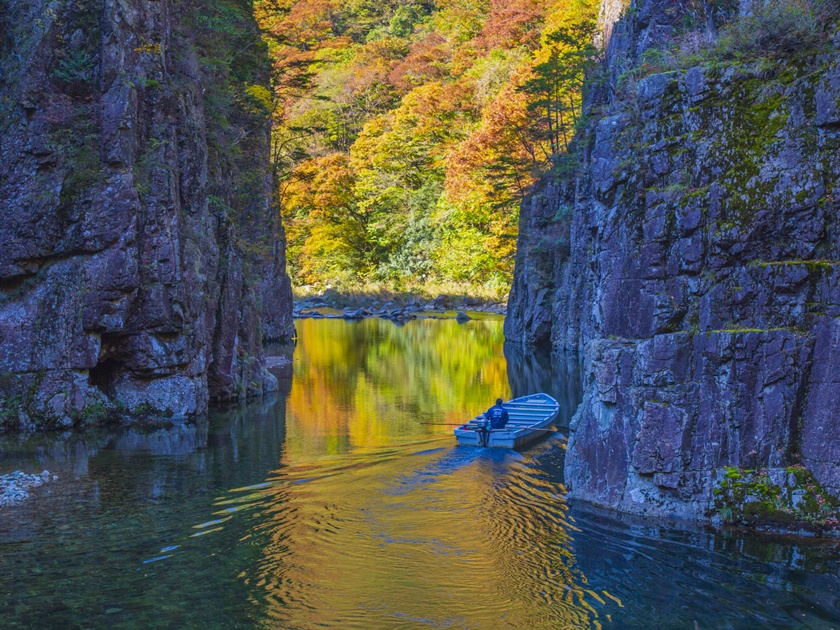
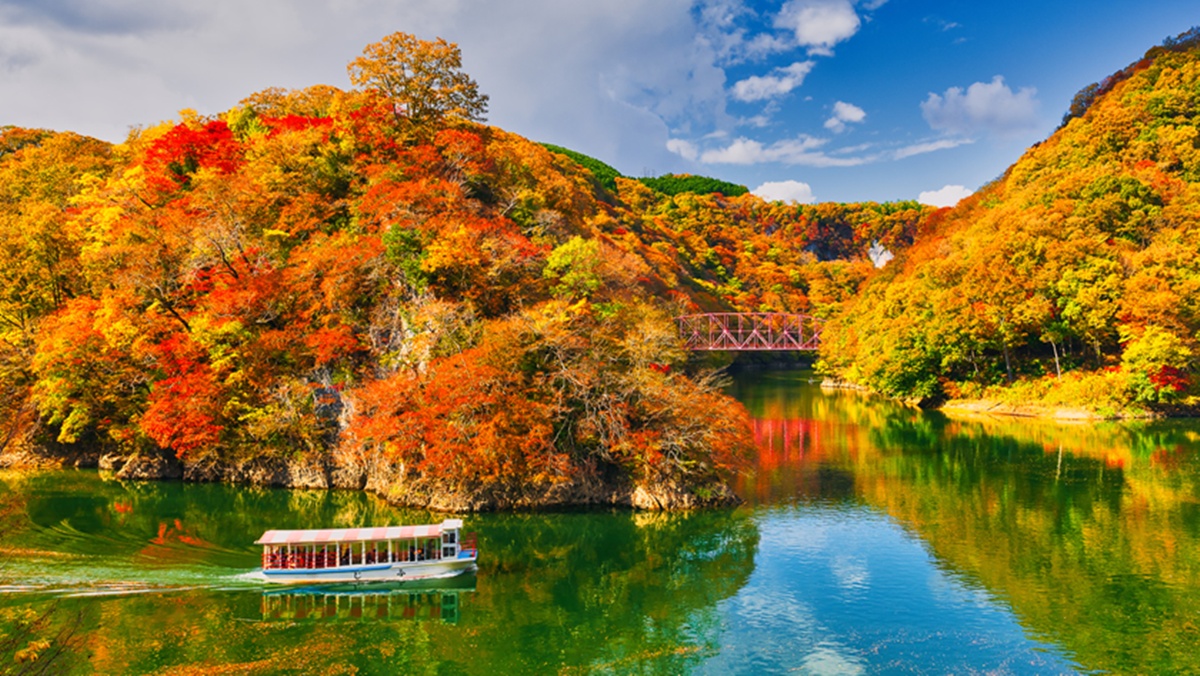
- Why go: A dramatic, 16-km canyon with boats rowing into emerald pools beneath sheer cliffs—one of the earliest places in the region to turn.
- Peak window: Typically late Oct–early Nov.
- Access: Express/local buses run from Hiroshima Bus Center to Sandankyo Main Entrance (seasonal variations; check the current timetable).
- On the water: Small boats at Kurobuchi and Sarutobi (weather/water-level dependent).
- Time needed: Full day (trail segments + boat).
9) Taishakukyo (Taishaku Gorge), Shobara/Jinsekikogen
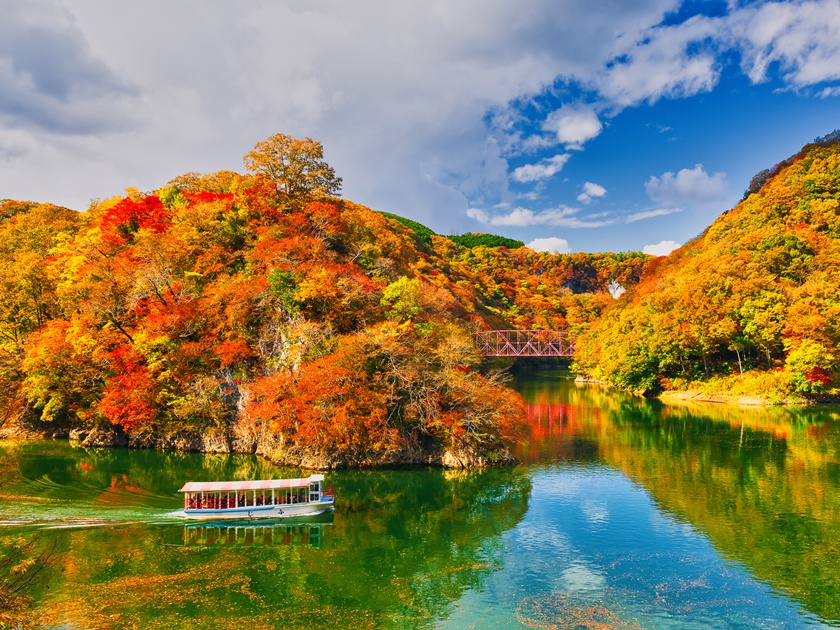
- Why go: A ~18 km valley in a quasi-national park, known for Onbashi, a striking natural stone bridge.
- Access: Best by car; combine lakeside strolls with the Onbashi area.
10) Fukuyama Castle Park, Fukuyama
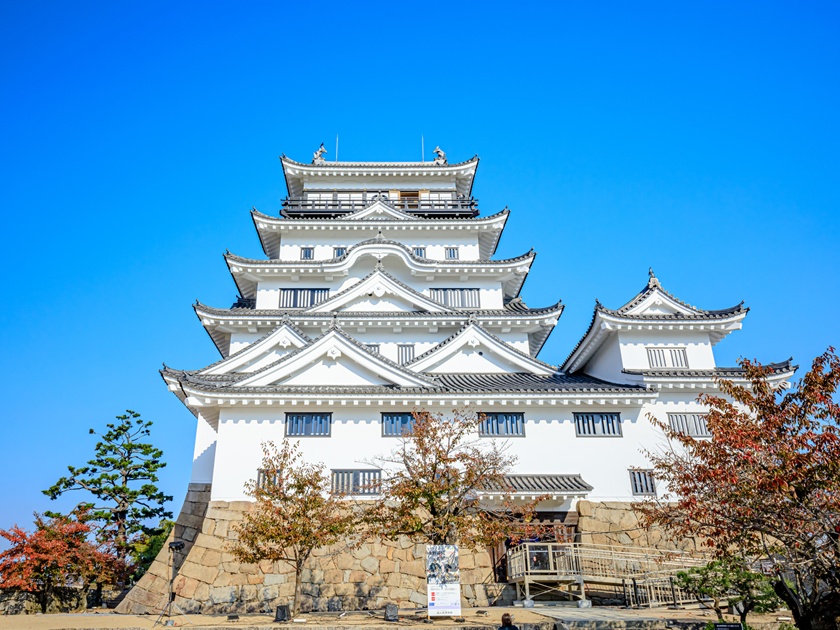
- Why go: The white keep set against maple and ginkgo makes an easy, photogenic stop by Fukuyama Station.
- Access: Steps from the shinkansen station; museum inside the keep.
1–3 day Sample Itineraries
1 day: City highlights (easy, no car)
- Morning: Mitaki-dera (quiet paths and waterfalls) → tram to Shukkei-en
- Lunch: Hiroshima-style okonomiyaki downtown
- Afternoon:Peace Memorial Park stroll → up to Hijiyama Park for sunset views
2 days: Miyajima focus
- Day 1: City loop as above
- Day 2:Miyajima: Momijidani Park → Miyajima Ropeway → summit lookouts → Itsukushima Shrine at high tide (if timing allows)
3 days: Add a gorge & the coast
- Day 1: City highlights
- Day 2: Sandankyo Gorge (earlier color, boat rides if operating)
- Day 3:Onomichi Senkoji Park cable car + old-town cafés
Practical & Respectful Travel Tips
- Footwear & layers: Paths can be damp and leafy; bring grippy shoes and a light rain shell.
- Crowds: Weekends in November can be busy at Miyajima and Shukkei-en—arrive early or go midweek.
- Peace sites: Maintain a quiet tone and avoid obstructing pathways in Peace Memorial Park.
- Accessibility:Shukkei-en has relatively even strolling paths; gorges have uneven terrain and boat operations depend on conditions.
Glow Time on the Inland Sea
Peak color hits fast and fades faster, so if Hiroshima’s maple glow is calling, answer it. Lock your dates, peep the koyo forecast a week out, and snag your Miyajima/city tours with HawaiiActivities.com before the crowds do. Pack layers, charge the phone, and let those ginkgo-lined paths do the rest. Leaf the planning to us—your camera roll’s about to go off.