Okhotsk Ice World: Snowshoe to Drift Ice & Icefall (Abashiri)

A crisp crunch underfoot, a cobalt sea riven with floating ice, and—tucked in a snowy cove—a frozen waterfall sculpted into pale-blue columns. This short, guided snowshoe in Abashiri is the easy, photogenic way to meet Hokkaido’s winter up close.
Quick Facts
- Where: Abashiri, northeastern Hokkaido (Sea of Okhotsk coast)
- Season for drift ice: Typically late January to early April, with the second half of February being the most reliable. Conditions vary by year.
- Tour length & times: Approximately 1.5–2 hours, with starts at 09:00 or 13:00; pick-up available in Abashiri. Minimum age accepted: elementary school (6–11) with an adult.
- Signature sights: Drift ice on the Sea of Okhotsk and the seasonal “Kujira (Whale) Falls” icefall.
Why this Experience
Each winter, sea ice forms around the mouth of Russia’s Amur River and rides winds and currents into the Sea of Okhotsk, reaching Hokkaido’s coast. Abashiri is one of the easiest places to see it, from shore level.
What You’ll Do
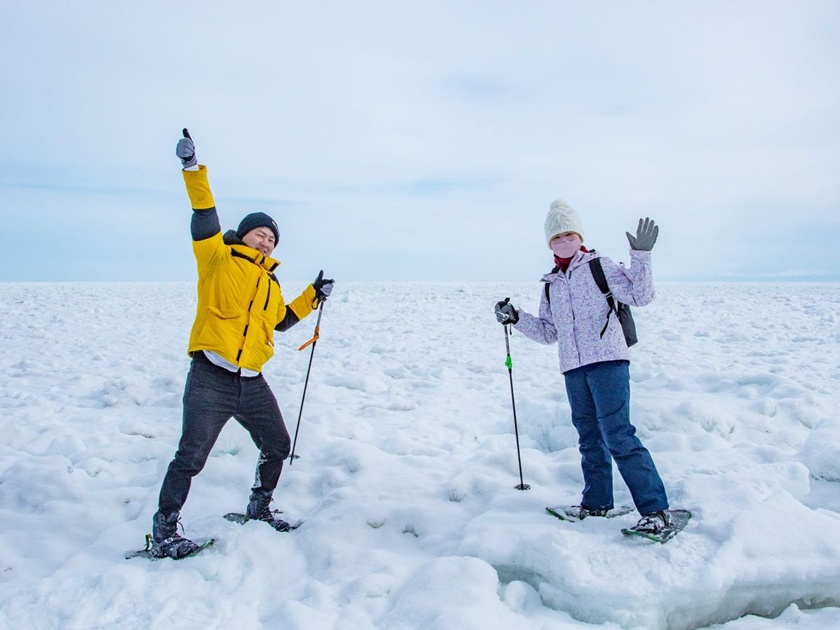
- Meet & brief: Rendezvous at Road Station Ryūhyō-kaidō Abashiri or opt for hotel pick-up. Guides explain drift-ice formation and route.
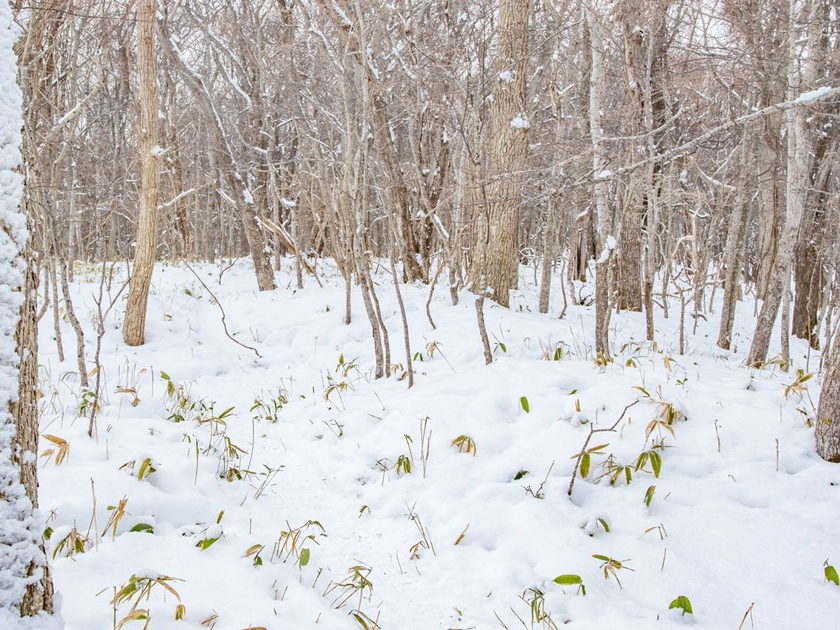
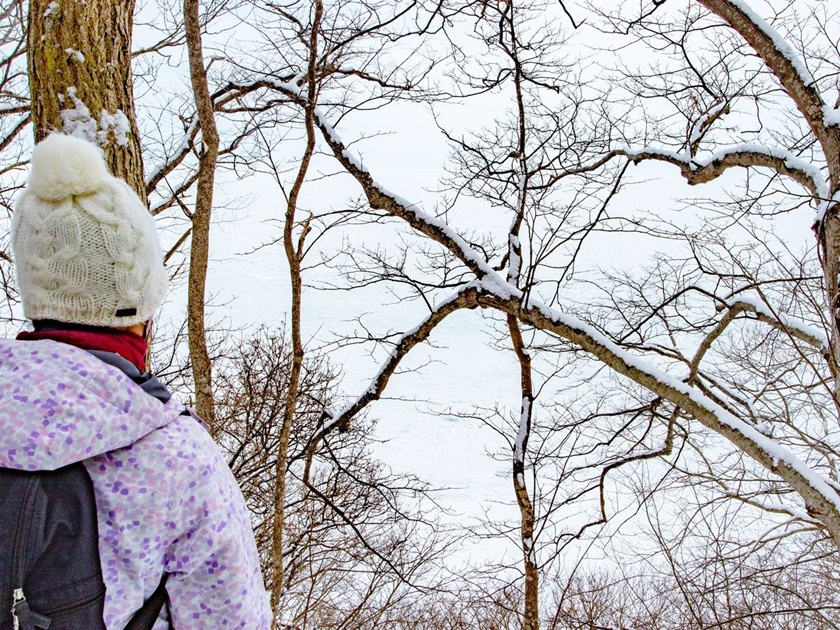
- Snowshoe to the coast: Walk through snowy forest to seaside lookouts where, in peak weeks, you can often spot drift ice right from shore—and sometimes hear the eerie “ice cry.”
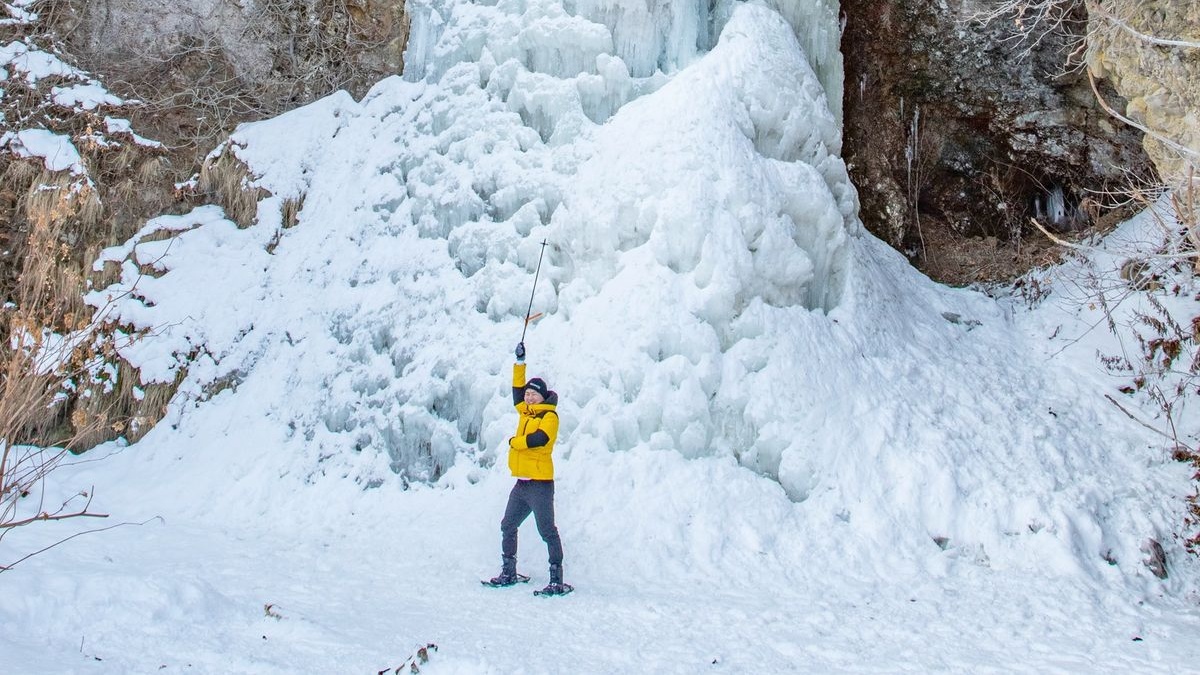
- Icefall stop: Continue to Kujira Falls, a cliffside seep that freezes into a photogenic ice sculpture. On still days, you may hear water murmuring within the ice.
When to Go
Most consistent drift-ice viewing: mid–late February, though some years start earlier or end later. Always check the daily outlook.
Getting There
- Fly to Memanbetsu (MMB): The airport sits ~35–40 min from Abashiri. Direct airport buses connect arrivals with Abashiri Bus Terminal (typical ride ~35 min; seasonal services also run onward toward Shiretoko).
- On the day: If you’re self-transferring, the meeting point is Road Station Ryūhyō-kaidō Abashiri (also the base for the Aurora icebreaker).
What to Wear & Bring
- Clothing: Thermal base layer, warm mid-layer (fleece/wool), waterproof jacket & pants, insulated winter boots, warm hat/neck warmer, gloves, sunglasses/goggles.
- Provided: Snowshoes (and, depending on conditions, alternate footwear in March). Expect real winter: it can feel like −20 °C on cold days.
Safety & Etiquette
- Tours may reroute or cancel in poor weather or unfavorable ice conditions—guides decide with safety first.
- Stay with your guide, don’t step onto sea ice unless explicitly instructed on a specialized activity, and keep respectful distances from any wildlife you encounter.
Make it a Combo
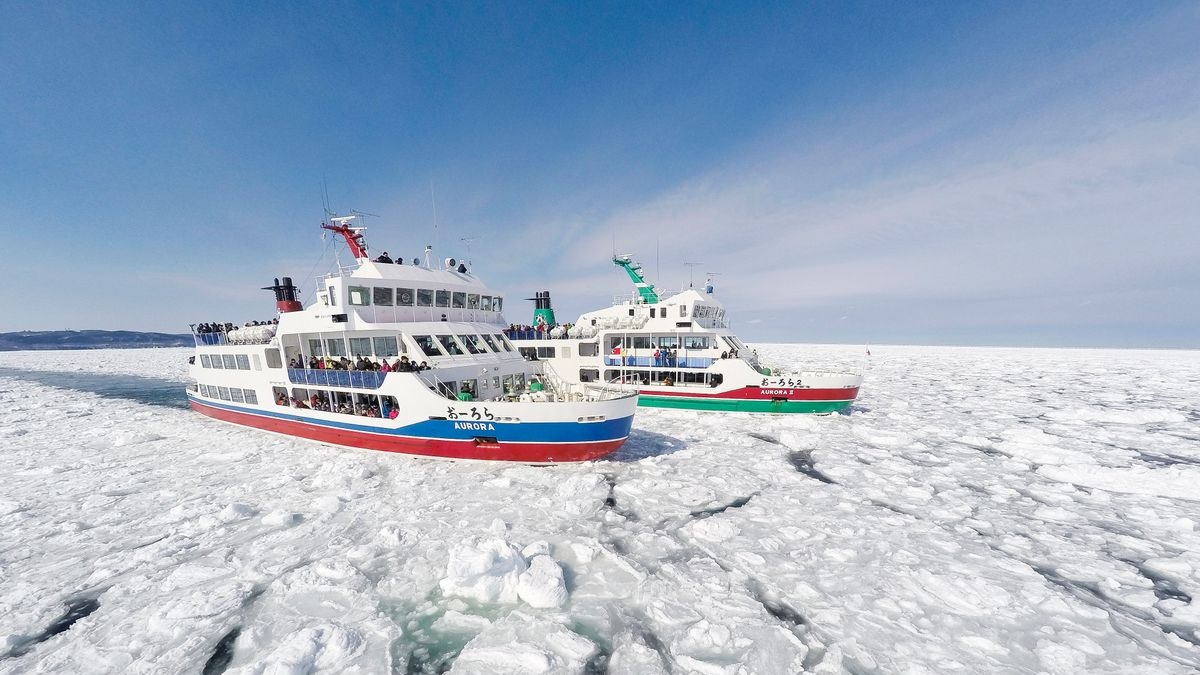
- Aurora Icebreaker (Abashiri): Add a short cruise among the floes for a different perspective before/after your snowshoe.
- Drift-ice & eagle cruises (Rausu): Farther east on the Shiretoko side, winter boats often spot Steller’s and white-tailed eagles on the ice.
Sample Itinerary (half-day)
- 08:55 / 12:55 — Check in at Road Station Ryūhyō-kaidō Abashiri (or hotel pick-up)
- Drive & briefing — Learn about drift-ice origins en route
- Snowshoe to coastal viewpoints
- Kujira Falls icefall stop & photos
- Return to Abashiri
(Exact timing and route vary with conditions.)
Frequently Asked Questions (FAQs)
Snow Way You’re Missing This
Out here at Okhotsk, your footsteps crunch over snow older than your playlist, waterfalls freeze mid-flow, and sea ice drifts in from another continent. It’s raw, cinematic, and kinda unreal—like walking through a live-action snow-globe collab between nature and Netflix. So grab your gloves, lace those snowshoes, and step into Japan’s wildest winter wonderland. Because once you’ve seen the drift ice shimmer in the Okhotsk light, you’ll never look at winter the same way again.