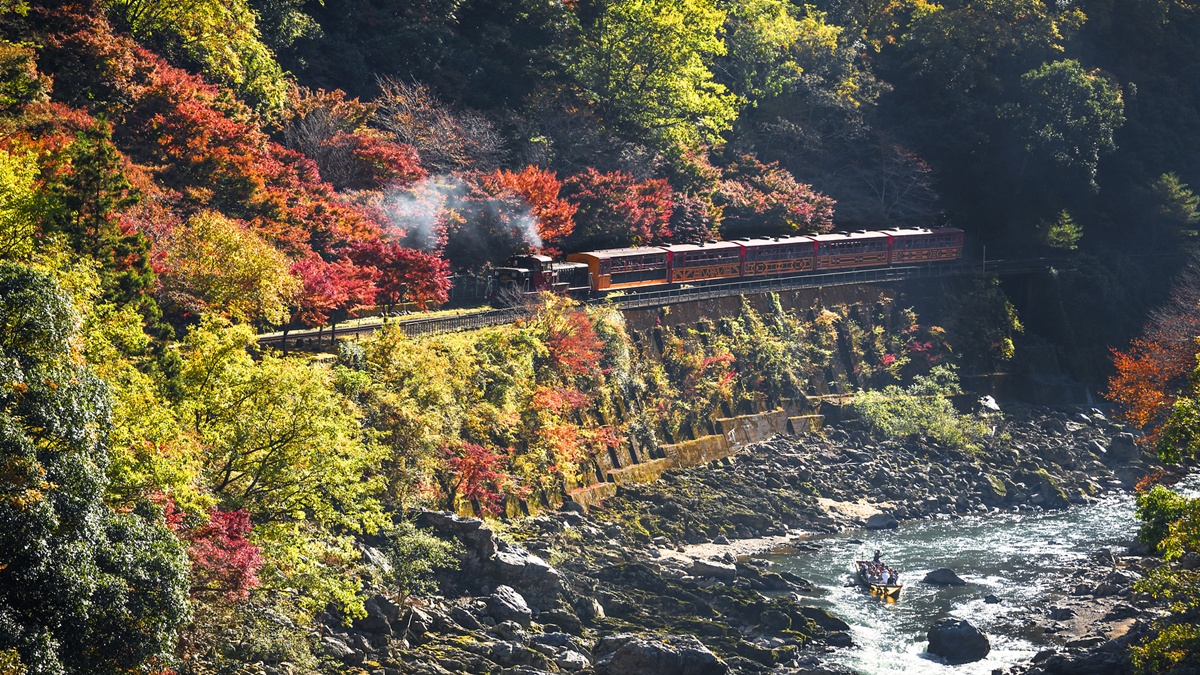
Best Places to See Autumn Leaves in Kyoto

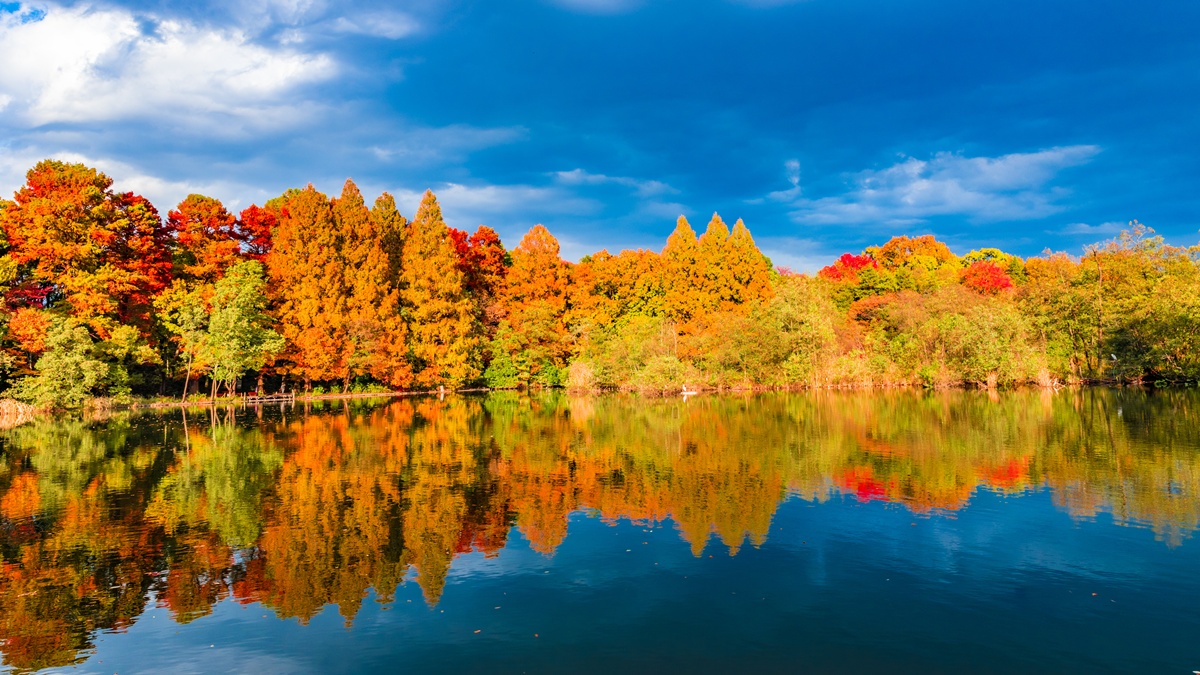
Kyoto in autumn is pure magic: temple gardens set ablaze with crimson momiji (Japanese maples), golden ginkgo avenues, and mirror-still ponds catching every hue. In a typical year, peak fall colors arrive from mid-November to early December, with some higher or northern areas coloring a bit earlier. Always check current forecasts, but as a rule of thumb, plan for the second half of November for the best odds.
When is the Best Time for Kyoto’s Autumn Leaves?
- Typical peak: mid-November to early December. Earlier color often shows up in higher elevations like Takao; lower, urban areas peak slightly later. The weather can advance or delay the peak by about a week.
- How to verify: Kyoto City’s official autumn leaves calendar updates each season with spot-by-spot guidance.
Top Places to See Autumn Leaves in Kyoto
1) Kiyomizu-dera (Higashiyama)
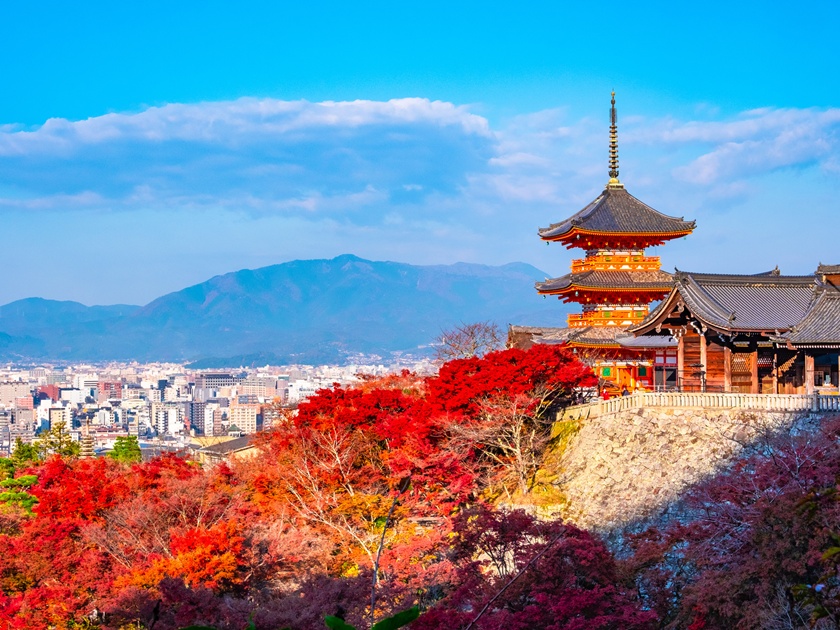
Famous for its grand wooden stage gazing over a valley of maples, Kiyomizu-dera is spellbinding by day—and otherworldly at night during its special autumn illumination (2025 dates announced as Nov 22–Dec 7, open until 9:30 p.m.). Expect crowds; go at opening, or arrive just before the evening light-up window.
Why it’s special: sweeping views from the stage, the blue “Kannon’s merciful light” beacon over the city, and easy pairing with historic lanes Sannenzaka and Ninenzaka below.
2) Tōfuku-ji & Tsutenkyō Bridge (Southeast Kyoto)
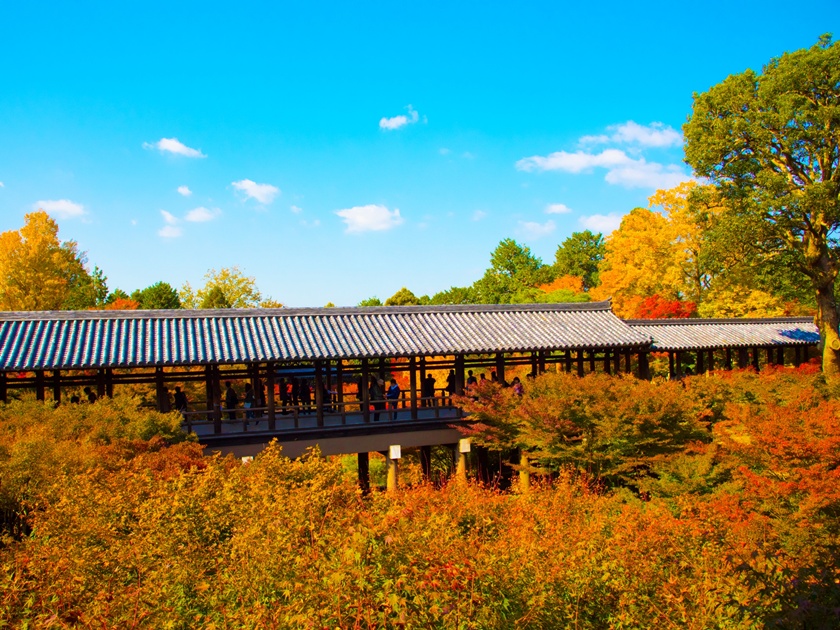
One of Kyoto’s most celebrated koyo spots, Tōfuku-ji, draws visitors nationwide. The classic view spans the Tsutenkyō Bridge over a maple-filled ravine—an ocean of red beneath you when colors peak. Go early on weekdays to ease the crush.
3) Arashiyama & Togetsukyō Bridge (West Kyoto)

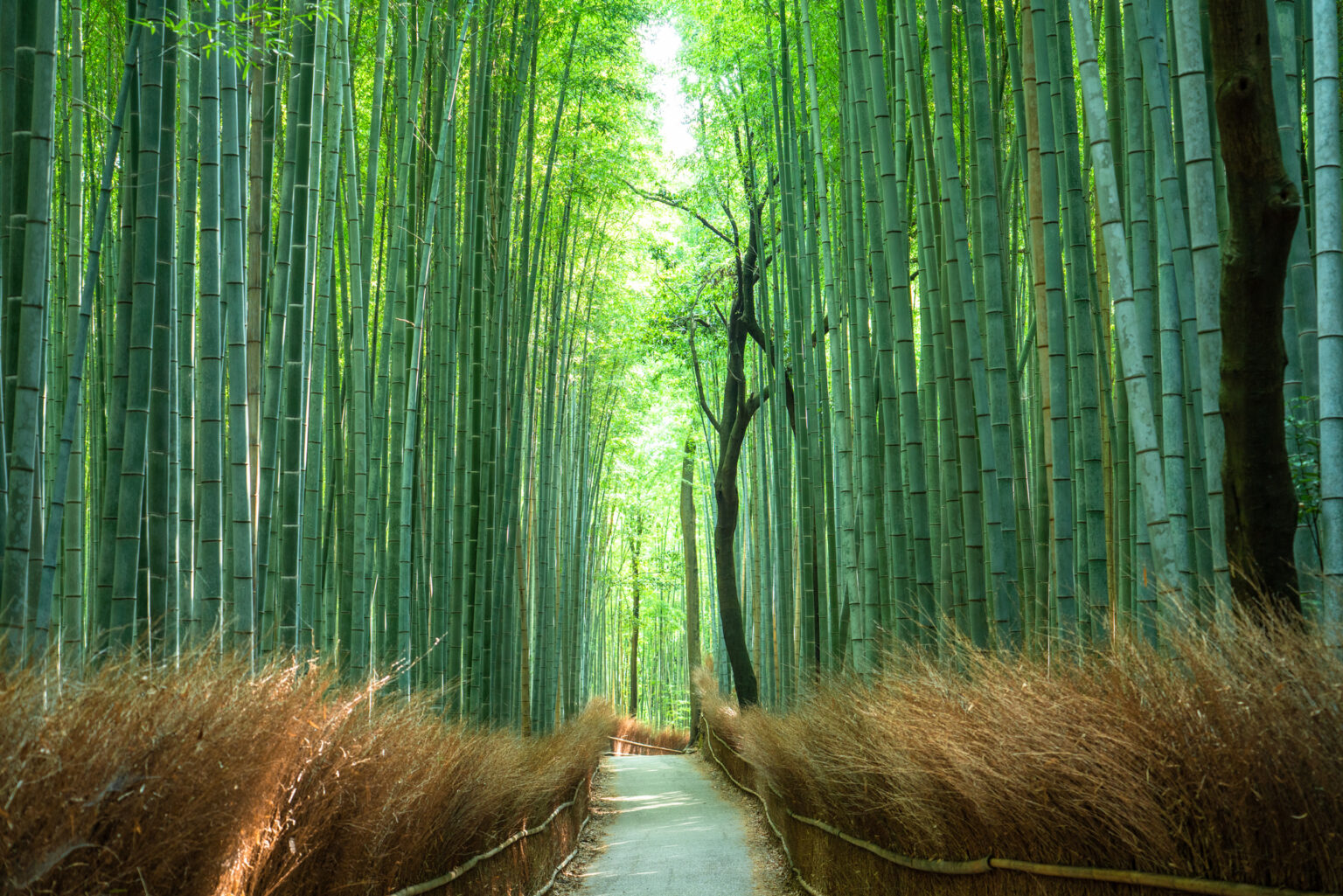
Arashiyama’s mountains turn into a tapestry of reds and golds, reflected in the Hozu/Katsura River around Togetsukyō Bridge (155 m span). Combine riverside foliage with the bamboo grove for a quintessential Kyoto day.
Pro tip: The bridge looks traditional, but the current structure is reinforced concrete under wood cladding—sturdy enough to handle the foot traffic that autumn brings.
4) Eikandō (Zenrin-ji)
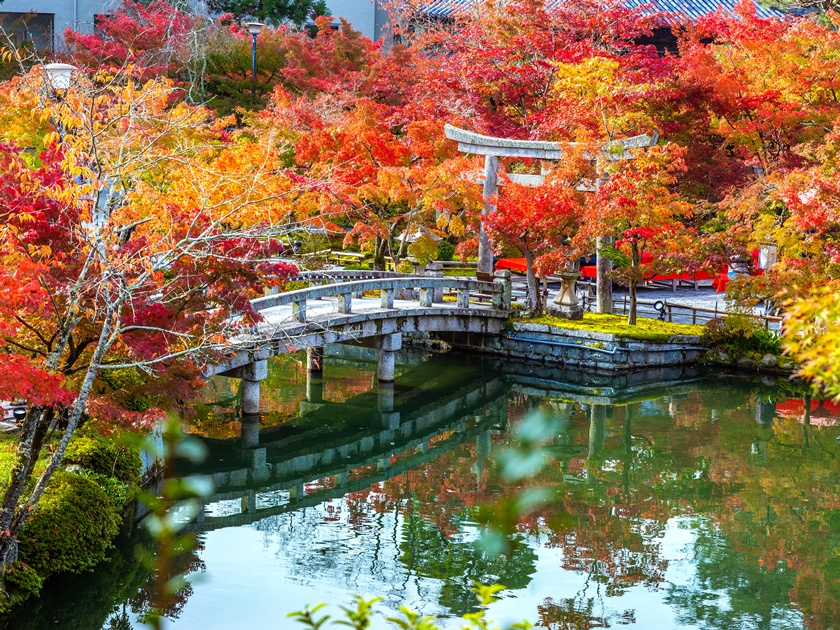
North of Nanzen-ji, Eikandō is synonymous with autumn in Kyoto. Its hillside pagoda, reflective pond, and night illuminations make it one of the city’s most atmospheric after-dark visits. The temple posts annual lighting plans and operational notes each season.
5) Kōdai-ji (Gion / Higashiyama)
![[京都]東山・清水寺参道の風景](https://www.veltra.com/en/travelguide/wp-content/uploads/2025/09/Kyoto_Higashiyama_Kiyomizu-sando_Gion_AdobeStock_480567625.jpeg)
Kōdai-ji’s garden illuminations (typically late Oct–early Dec, evenings) bathe maples and ponds in dramatic light—perfect to pair with nearby Yasaka Pagoda or a Gion stroll. Always reconfirm each year’s exact dates/hours before you go.
6) Nanzen-ji & the Philosopher’s Path (Higashiyama)
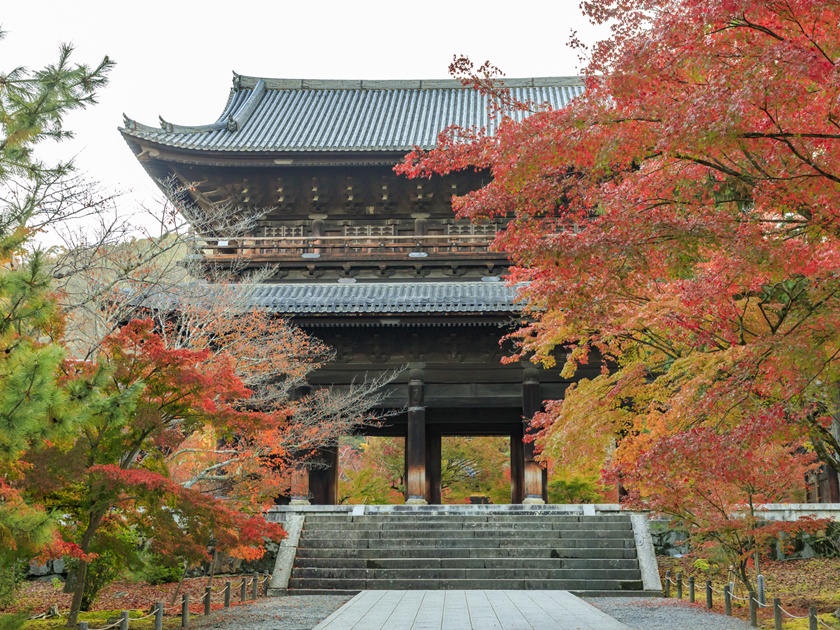
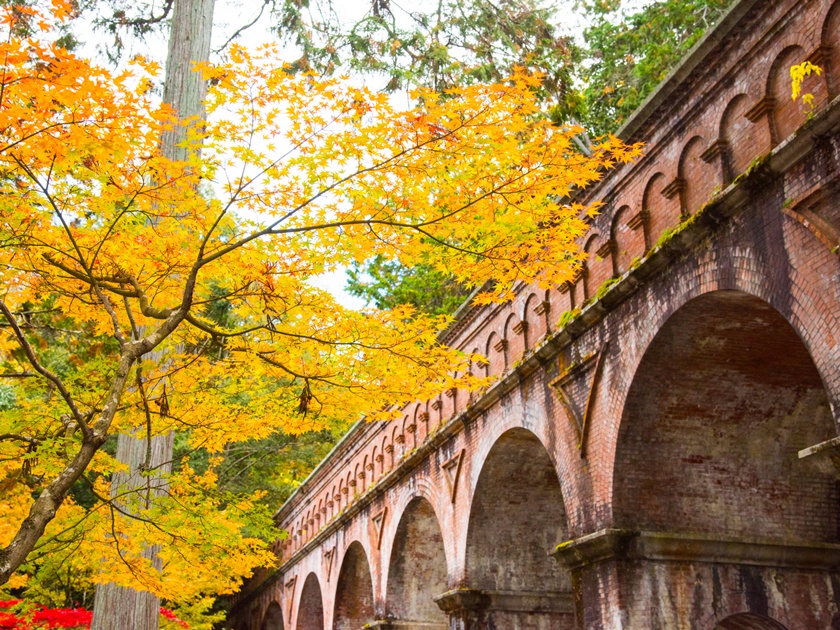
Head temple of the Rinzai Zen sect, Nanzen-ji pairs classic Zen gardens with autumn maple accents and its photogenic brick aqueduct. From here it’s a short walk to the Philosopher’s Path, a 2-km canal walk running between Nanzen-ji and Ginkaku-ji—peaceful, pretty, and gorgeous in koyo season.
7) Daigo-ji (Fushimi)
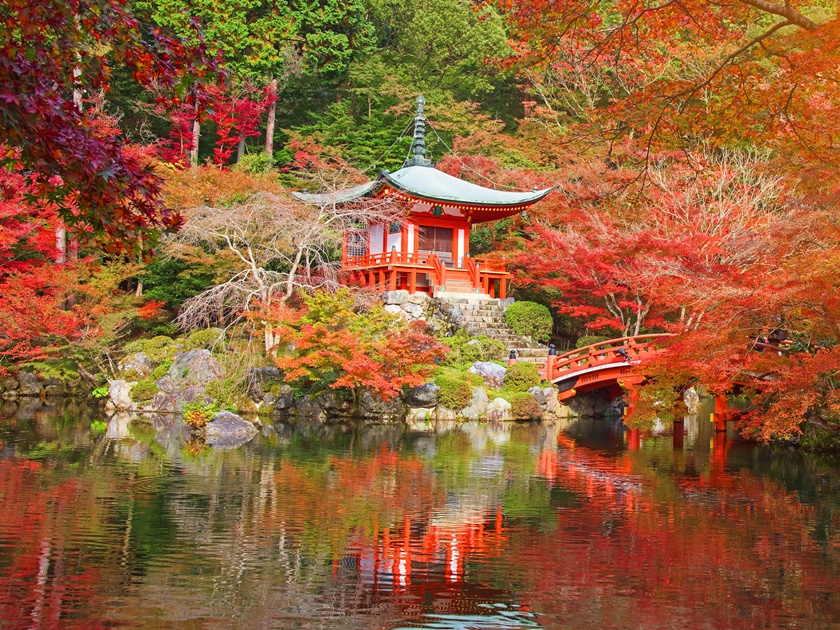
A UNESCO World Heritage temple complex famed for vermilion halls mirrored in still ponds—Benten-do by the water is the money shot. Night viewings/illuminations highlight maples and the five-storied pagoda during fall.
Off-the-Beaten-Path (Quieter) Spots
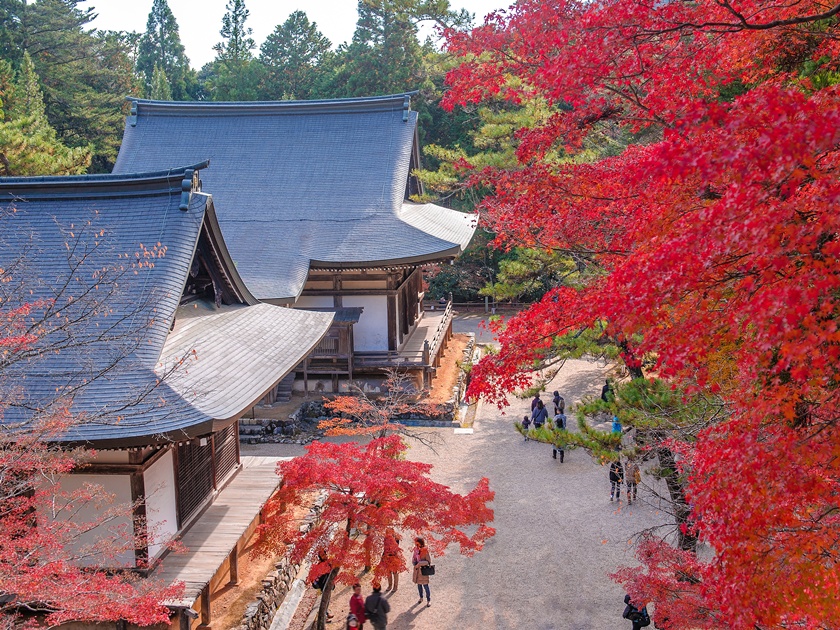
Takao (Jingo-ji, Saimyō-ji, Kōzan-ji)
In the forested hills northwest of central Kyoto, Takao often colors earlier (late Oct into mid-Nov). Jingo-ji is the star, with steep stone steps lined by blazing maples and valley views toward the Kiyotaki River; Saimyō-ji and Kōzan-ji round out a perfect half-day hike.
Shugaku-in Imperial Villa (Sakyō)
A serene imperial garden of three terraces (Upper/Middle/Lower), designed to frame “borrowed scenery” of the mountains—sublime in autumn when maples reflect in ponds. Advance reservations (guided tours) through the Imperial Household Agency are generally required.
Practical Tips for Enjoying Kyoto’s Autumn Leaves
1) Timing & Crowd Strategy
Aim for weekday mornings at headline temples; evenings are ideal for illuminations (Kiyomizu-dera, Eikandō, Kōdai-ji). Confirm current-year dates/hours before you go.
2) Getting Around
Kyoto’s buses can be slow when crowds peak. Use rail + walking where possible (e.g., JR to Saga-Arashiyama for Togetsukyō; Keihan/Tozai for Higashiyama). Official spot pages and the city’s seasonal info hub offer reliable orientation and updates.
3) Photography Tips
Golden hour lights up temple wood and maple reds; calm, overcast mornings give rich, glare-free colors and glassy pond reflections (Eikandō, Daigo-ji). Night illuminations are tripod-restricted at many sites—travel light and bump ISO as needed (check venue rules via official pages).
4) Book Early
Autumn is high season. Reserve accommodations near Gion/Higashiyama for temple hopping, or Arashiyama for riverside foliage. Cross-check dates with the city’s Autumn Leaves Calendar before locking in plans.
5) Special Access & Tickets
Shugaku-in: free but guided-tour reservations needed; limited same-day slots may be available. Kōdai-ji and Kiyomizu-dera sell separate evening tickets during illuminations. Verify details close to your travel date.
Suggested 2-Day Autumn Itinerary (Sample)
Day 1 – Higashiyama focus
- Morning: Kiyomizu-dera → Sannenzaka/Ninenzaka → Kōdai-ji.
- Afternoon: Nanzen-ji → Philosopher’s Path → Eikandō.
- Evening: Eikandō or Kōdai-ji light-up (check which runs that night).
Day 2 – Western hills
- Morning: Arashiyama (Togetsukyō Bridge, riverside walk).
- Afternoon: Optional Sagano stroll or Daigo-ji (if you want a different vibe and reflections).
- Evening: Consider Kiyomizu-dera illumination if you didn’t do Eikandō/Kōdai-ji.
Where to Stay (Autumn)
- Higashiyama/Gion: Walkable to Kiyomizu-dera, Kōdai-ji, Nanzen-ji, Eikandō; great for evening illuminations and photography runs.
- Arashiyama: Riverside scenery and mountain backdrops at your doorstep—ideal if you want sunrise/sunset at Togetsukyō without crowds.
We Came, We Saw, We Koyo’d
Kyoto’s koyo is as much about moments as places—sunlight through maple lace at Eikandō, river mists by Togetsukyō, the hush of Nanzen-ji’s gardens. With a little timing, some early starts, and a night illumination or two, you’ll catch the season at its most spectacular.