What is the Himeyuri Tower? A tourist spot where you can learn about the history of the Battle of Okinawa on land

Okinawa is not only popular as a resort destination but also holds a deep historical significance dating back to the era of the Ryukyu Kingdom. As an opportunity to learn about the Battle of Okinawa that took place during World War II, the Himeyuri Tower plays a crucial role. In this article, let's explore Himeyuri Tower, a historical site that is a must-visit during your Okinawa sightseeing journey.
*This article is translated using ChatGPT.
For the latest information on each tourist spot and facility, we recommend checking the official website.
- 日本 、沖縄県
INDEX
Basic Information about Okinawa and Himeyuri Tower
Movies, Novels, and Manga Works
Access fromAccess from Naha Airport
Himeyuri Tower Tourism Information
Himeyuri Peace Memorial Museum
Recommended Restaurants for Lunch near Himeyuri Tower
Recommended Sightseeing Spots in Okinawa
Kokusai Dori (International Street)
Make the most of local optional tours to enjoy cultural experiences in Okinawa
Basic Information about Okinawa and Himeyuri Tower
Understanding even just the summary will help you appreciate the significance of Himeyuri Tower when you visit it in person. Let's start by covering some basic information, such as access methods and parking locations.
What is Himeyuri Tower?
Himeyuri Tower is a monument built on top of the Irabu Third Surgical Cave, which is considered the final resting place of the Himeyuri Student Corps. The Himeyuri Student Corps refers to 222 students from Okinawa Girls' High School and Okinawa Prefectural First High School, along with 18 accompanying teachers, who were assigned as nursing staff to the Okinawa Army Hospital in Nanjo in late March 1945.
During that time, the Himeyuri Student Corps worked tirelessly, as the number of wounded soldiers kept increasing and there was a shortage of manpower. They fetched water, served meals, and even buried the dead.
On June 18th, after a sudden "disbandment order," the Irabu Third Surgical Cave, where the staff of the Okinawa Army Hospital's Third Surgical Department and the Himeyuri Student Corps had taken refuge, was hit by a gas shell attack from the US military, resulting in the loss of many lives. It is said that some of the students took their own lives as well. In 1946, this memorial monument was erected to honor the spirits of the deceased Himeyuri Student Corps members.
The name "Himeyuri" is derived from the fact that Okinawa Prefectural First High School was called "Otohime" and Okinawa Model School Girls' Division was called "Shirayuri," so they were combined to form "Himeyuri."
Movies, Novels, and Manga Works
The story of the Himeyuri Student Corps, who made every effort until the end, has been conveyed in various forms. Novels such as "Himeyuri no To" by Keiichiro Ishino and "Himeyuri no To o Meguru Hitobito no Nikki" by Masayoshi Nakasone have also been adapted into films. In addition, there are manga publications available that are easy for children to understand. It's important to remember this significant story to learn about the horrors of war.
The Molotov Cocktail Incident
On July 17, 1975, 30 years after the war, the "Himeyuri Tower Incident" occurred. Due to the background of the intense ground battle during the war, which involved even civilians in Okinawa, resulting in a total of 200,000 casualties including the Japanese military, there was a group called the "Okinawa Liberation Alliance Preparatory Committee," which was a new left-wing group questioning the war responsibility of the Emperor.
In such circumstances, the Crown Prince and his wife set foot on Okinawa for the first time to attend the opening of the Okinawa Ocean Expo and visited Himeyuri Tower to pay their respects. Starting from when they entered Itoman City, there were incidents where extremists threw stones and other objects at the procession, but fortunately, the Crown Prince and his wife were unharmed and safely arrived at Himeyuri Tower.
However, during the explanation at Himeyuri Tower, a Molotov cocktail was thrown by extremists who had taken cover in a hole (bunker) near the tower. This incident left a strong message that the Emperor would continue to have heartfelt concern for Okinawa.
This incident served as a reminder to society of the lasting and profound impact of the war, which resulted in numerous casualties, and the importance of peace.
Access fromAccess from Naha Airport
Himeyuri Tower is located in Itoman City, in the southern part of Okinawa Island. It is approximately a 30-40 minute drive from Naha Airport.
Bus and Taxi Fare
If you plan to use the bus from Naha Airport, I recommend taking the Yui Rail to "Akamine Station" first. It will take about 5 minutes to reach the station. From there, take a bus bound for Itoman City. After approximately 30 minutes, you will arrive in Itoman City. Then, board bus number 82, 107, or 108, and get off at the "Himeyuri no To-mae" stop after about 15 minutes. It's just a 3-minute walk from there to Himeyuri Tower.
As for the fares, the Yui Rail costs around 230 yen for adults (120 yen for children), and the bus fare is approximately 840 yen. For taxi fare, expect around 5,000 yen.
Parking Location
Parking is available free of charge. The parking lot is located near the "Himeyuri Mingei Center" or the "Himeyuri Kaikan" buildings in the vicinity.
Himeyuri Tower Tourism Information
Let's introduce some tourism information, such as fees and nearby facilities. There are also other facilities in the vicinity where you can learn more about history, so be sure to visit if you're interested.
Tower Admission is Free
Admission to Himeyuri Tower is free, and you can purchase flowers at the entrance. There is a flower stand in front of the tower where you can offer your respects.
June 23rd is the Day of Remembrance, marking the end of the Battle of Okinawa, and an annual memorial ceremony is held.
Himeyuri Peace Memorial Museum
On the left side after passing through "Himeyuri Tower," you'll find the Himeyuri Peace Memorial Museum. Established in 1989, this museum tells the tragic story of the Himeyuri Student Corps and emphasizes the importance of peace. It was founded by the alumni of the Himeyuri Student Corps.
Overview of Exhibits
The museum showcases exhibits related to the war, including medical equipment and battlefield belongings from that time. There is also a room with dioramas replicating the hospital cave and the Irabu Third Surgical Cave. There's a room adorned with testimonies of survivors, serving as a space for paying respects to the victims. With the six exhibition rooms inside the museum, you can learn about the student corps' school life before the war and understand the historical timeline. Let's remember the importance of history while considering the future for generations to come.
Admission Fees
As of July 22, 2020, the fees were revised following the renovation.
For individuals, the admission fees are as follows: 450 yen for adults, 250 yen for high school students, and 150 yen for elementary and middle school students. For groups of 20 people or more, discounted prices apply: 400 yen for adults, 200 yen for high school students, and 110 yen for elementary and middle school students. Admission is free on June 23rd (Day of Remembrance).
Exceptions include free admission for one disabled person and one caregiver. Proof of disability, such as a disability certificate, is required upon entry.
Estimated Tour Duration
If you visit both Himeyuri Tower and the Himeyuri Peace Memorial Museum, the recommended duration is approximately 40 minutes to 1 hour. You can explore Himeyuri Tower itself in about 10 to 15 minutes.
Nearby Souvenir Shops
You can purchase souvenirs at the "Himeyuri Mingei Center" and "Himeyuri Kaikan," where parking is available.
The "Himeyuri Mingei Center" offers souvenirs primarily focused on Okinawan folk crafts. The "Himeyuri Kaikan" is a complex facility with souvenir shops and restaurants. They also provide a convenient service for shipping souvenirs nationwide, so be sure to take advantage of it.
Recommended Restaurants for Lunch near Himeyuri Tower
Around the tower, there are restaurants where you can enjoy the unique flavors of Okinawa. Here are some recommended restaurants that are easy to stop by in between sightseeing at Himeyuri Tower.
Himeyuri Kaikan
We mentioned Himeyuri Kaikan earlier, which includes parking and souvenir shops, but the restaurant inside is also recommended for lunch. It has a great location, allowing you to stay close to Himeyuri Tower without moving too far. They offer a wide variety of Okinawan classic dishes, and there's even a parlor that sells Blue Seal ice cream, making it a perfect Okinawan dining experience, including dessert.
Yubido
Located on the opposite side of the road from Himeyuri Tower, Yubido has a souvenir shop as well. Their seafood rice bowl with sea grapes is popular, but what made them famous through word-of-mouth is their freshly fried pumpkin Sata Andagi (Okinawan donut). These homemade Sata Andagi, made fresh every day, have become a huge hit, with over one million sold annually. You can even buy them as souvenirs, so make sure to get some, even if you're already full.
Chadokoro Makabe Chinaa
This restaurant offers Okinawa soba and traditional set meals, and it's about a 5-minute drive from Himeyuri Tower. It is housed in an old folk house built around the year 1891, giving you a sense of its historical charm. Inside the restaurant, you'll even find pillars that bear the scars of war, reminding you that the building has survived through the fires of war. It's highly popular and mentioned in guidebooks, so be sure to allow ample time when visiting.
Recommended Sightseeing Spots in Okinawa
In addition to Himeyuri Tower, there are numerous tourist destinations in Okinawa where you can delve into its history. Why not combine your visit to Himeyuri Tower with these attractions?
Peace Memorial Park
Located in Maehara, Itoman City, this park is the site of the final ground battle of World War II in Okinawa. In addition to a museum, there are memorial monuments called "Kokumonhi" that bear the names of over 240,000 people who lost their lives in the Battle of Okinawa, symbolizing remembrance and everlasting peace. Learn about the value of peace through history and deepen your knowledge of the Battle of Okinawa.
Shuri Castle
Built when the Ryukyu Kingdom was founded in the 14th century, Shuri Castle is a historical fortress. In December 2000, the Shuri Castle Remains, Shureimon Gate, and Tamaudun Royal Mausoleum were collectively registered as a UNESCO World Heritage site under the name "Gusuku Sites and Related Properties of the Kingdom of Ryukyu." Its unique architectural style, influenced by its connections with China, is also worth seeing.
However, on October 31, 2019, a fire caused significant damage. The main Seiden area is currently under reconstruction, but approximately 80% of the castle was accessible for visitors before the fire. As a representative landmark of Okinawa, it is definitely worth a visit.
Kokusai Dori (International Street)
Lined with restaurants and souvenir shops, Kokusai Dori is a bustling shopping street and one of the largest in Okinawa. It was planned by the US military and the Ryukyu government after World War II to provide entertainment for the post-war population. The name of the street originates from the "Ernie Pyle International Theater," a cinema named after an American war correspondent who lost his life during the war.
Nakijin Castle Ruins
Nakijin Castle was the stronghold of Hokuzan, one of the three kings who ruled from northern Okinawa Island to the Amami region in the 14th century. In 1609, the castle was burned down during the invasion of Ryukyu by the Satsuma clan. However, you can still see the remains of the residence and outer walls. In 2000, it was registered as a UNESCO World Heritage site along with Shuri Castle. It is a valuable castle ruin selected as one of Japan's Top 100 Castles.
Make the most of local optional tours to enjoy cultural experiences in Okinawa

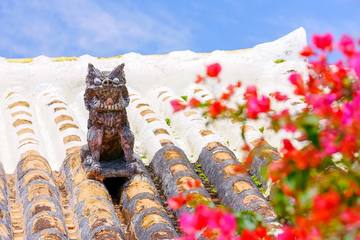
At Himeyuri Tower, you can deeply learn and understand Okinawa's history and war. However, if you want to delve even deeper into the culture, I recommend trying unique cultural experiences that are available only in the local area. For example, you can have a commemorative photo taken in traditional Ryukyuan costumes, try coral dyeing, or make pottery shisa (traditional lion statues). These Okinawan-specific experiences will make your trip more memorable. With Veltra, you can make advance reservations for various experiences, so be sure to check them out!
*Please note that transportation, facility fees, and operating hours are subject to change without notice. For the latest information, please refer to the official website.
*Thank you for reading the article!
To improve YOKKA's service, we kindly request your participation in a survey below.
YOKKA